
My Austin Vida: When I Felt Like I Belonged Here
How a young Mexicana evolved with Austin. This personal essay is part of the My Austin Vida community essay series highlighting the Austin Latinidad experience.

When I moved to Austin, Texas, as a young Mexican woman in the early 1980s, Austin was a pueblo bicicletero, a town small enough you could ride your bike, walk undisturbed on the street in the absence of catcalls, and enjoy a very relaxed dress code. Even though it was the capital of Texas, and still is, it had a small-town feel. A mix of Victorian, Craftsman and Cumberland houses, plus a few modern ones, lots of elm and oak trees, created an unpretentious, open yard look. In Austin, there were few employers other than government, the University of Texas at Austin (UT) and an incipient tech scene. I could not believe how empty MoPac was back then, this main north-south highway flowed smoothly at any time of day. The same cannot be said today.
Central Austin is a far cry from the Mexico City I grew up in the 1960s and 1970s. Boasting 13 million people when I migrated to the United States in 1981, at age 21, the metropolitan area of Mexico City has now almost 23 million people. So when folks in Austin groan about Austin’s explosive growth, I say yes, but. Austin’s population was shy of half a million in the 1980s and reaches up to 2.3 million today.
A vegetarian at the time, my first job in the U.S. was flipping burgers at the Texas Union, the student activity center and food court at UT Austin. I knew enough English to take orders, though I never tasted what we made. But the two dishwashers in the back made sure they got their daily burger, no onions, lots of pickles, dry bun, thank you very much. An older Latino worker in the deli section of the Texas Union took me under his wing and gifted me his favorite tomato knife. Not being a good cook, not even a moderately competent one, I knew I did not want to spend the rest of my life in a commercial kitchen. I had my eyes set on UT.
“Por eso aún estoy
en el lugar de siempre,
en la misma ciudad
y con la misma gente.”
—Juan Gabriel
Sometimes innocence is bliss, as I had no clue UT was the flagship institution of Texas public higher education. As luck would have it, after I completed a year of employment to obtain my Texas residency, I got admitted to the Anthropology department. I got credit for a full year of college in Mexico City.
A childhood friend once asked me when I felt like I belonged here, when I felt I was an American. I said two things: being able to vote for the first time in my life, in the year 2000, and living a second childhood through my children’s eyes, in English, with different customs and expectations. Thanksgiving was new to me, as was the American version of Easter. Some immigrants describe these two traditions as El Día del Guajolote (Turkey Day) and El Día de la Coneja (She-rabbit Day). Makes sense, judging from the hand-colored pictures children bring home from school.
An immigrant through marriage, I waited to become an American citizen until 1998, when Mexico allowed dual citizenship through an amendment to Article 20 of the Mexican Constitution. I was not alone. Although I’d qualified for naturalization since 1986, I wanted to make sure I also retained my rights as a Mexican citizen. Those include owning property in Mexico and voting in Mexican elections. But more than that, I feel I am a citizen of both countries. At last, this became possible. And with it, the right to vote in U.S. elections, both local and national. Voting gave me more of a stake, a keen interest in helping decide the future of laws that affect our day-to-day, and a say about those who represent us. I paid more attention to domestic vs. international news, and did my homework before heading to the voting booth.
Living a second childhood through the bedtime stories of “Madeline,” “The Berenstain Bears,” “Captain Underpants,” “Goodnight Moon,” “The Cat in the Hat,” and “Ramona Quimby,” among others, gave me an insight into a different culture. I’d not only read the English originals to my kids, but at a time when few translations of children’s books were available, I’d provide my own improvised translations as I read along. That was one of my main goals in raising our kids. Not only would they receive a good education in English, but they’d be conversant in Spanish. That proved to be swimming against the current, with everything in the environment screaming English, as it should. We were in the US of A after all. But Texas’ long Mexican history, as well as the whole Southwest and Florida, merit the careful consideration of instilling Spanish as a vital and long-lived language of the borderlands.
Our daughter went back and forth between the two languages, effortlessly. She spoke English to her Anglo dad and Spanish to me without skipping a beat. Later, she lived and studied in several Spanish-speaking countries, including Costa Rica, Chile, Colombia, and Ecuador. She’s now fluent in Spanish and thanks me for her ‘forever gift.’ But raising bilingual children was not always easy. I had to think of ways to make them see that Spanish belonged to many other people beyond our household. We had a group in Austin, el Club de Español, that met to practice Spanish at different central Austin parks, such as Rosedale, Shipe, West Austin, or the playground at the old Parent Infant Child Center on a hill in Clarksville. What ended up happening was that the bilingual parents spoke Spanish to one another while the kids communicated in English, but at least they overheard us speaking Spanish.
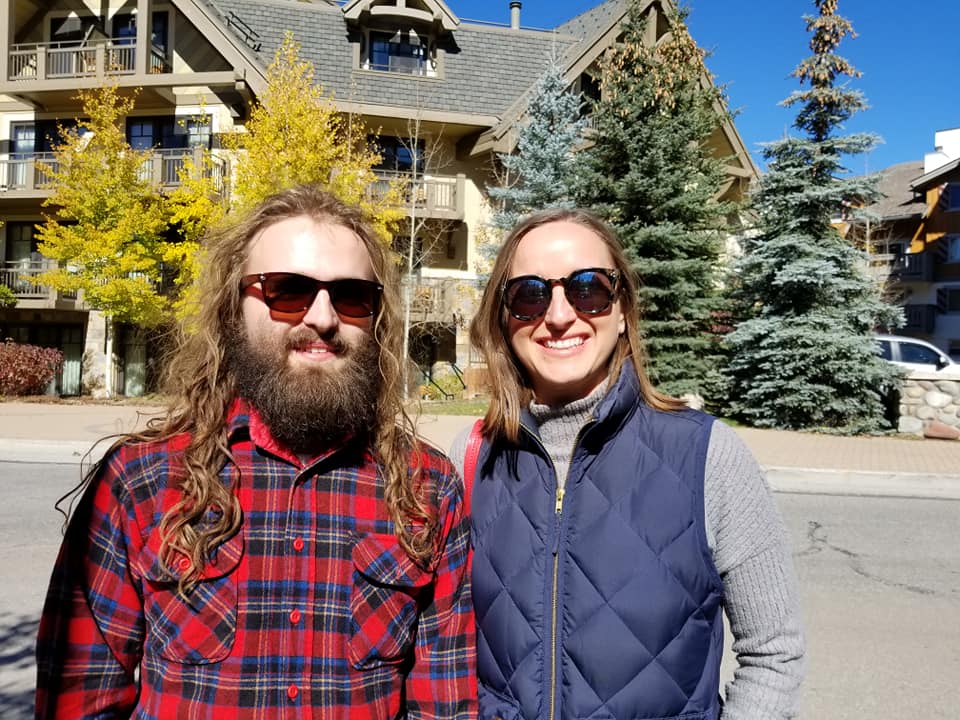
Our son was fully immersed in Spanish until age three and spoke it with no American accent. When he started pre-school, he froze at hearing this mostly new language – English. He switched to speaking primarily in English and though he could still understand Spanish, he resisted speaking it. A perceptive child, one time he asked me, “Why do the Spanish people always work for the English people?” My reaction was to refute him, to say that Spanish speakers held all kinds of jobs – teachers, scientists, doctors, etc. But he called it, he knew what he saw. Inequalities were as stark then as they are today, when this new administration threatens massive deportations.
He now occasionally uses his Spanish at his construction job site. Others rely on him. He makes me chuckle when he uses Chicano street slang such as “chale,” “ranfla,” “raza,” and “vato loco,” some of which he learned by watching the movie “Blood In, Blood Out” on repeat. I love that he uses and gets these references. One time, when he traveled to Oaxaca, Mexico, with friends, he was again cast in the role of guide and interpreter. He hadn’t been to Mexico in a while, so I was gratified when he said that once in Oaxaca, “I just felt at home.” Despite all the inertia and cultural forces going against us as a bilingual, bicultural family, some seeds were firmly planted.
Today, I’d add another moment when I felt at home in Austin. That was at Resistencia Bookstore, when the self-proclaimed chicanindio raúl salinas embraced us young poets and gave us a platform in which to hone our voice and read in community. Resistencia’s location in the late 1980s was on South First Street, and I went there often. Although I had some serious stage fright at first, his copal smudging at the beginning of readings and other community events, the words from his corazón welcoming us into his space made us feel welcome. One time, I didn’t realize I had my fists closed. He came by with the incense and gently opened my palms and blew copal smoke into them. I didn’t understand what he was doing right away. I learned to keep my palms open, giving and receiving in one continuous exchange.
Our one-block street keeps changing its façade. We can’t stop development nor more people moving in, as I did in the early 1980s. Our street used to be modest houses, renters, homeowners, hippies, and UT students living in garage apartments in back. Quite different from across Enfield Road, where real Old West Austin mansions, surrounded by manicured lawns and landscaping, sit regally on expensive square footage.
I, too, contributed to gentrification in my once-African American neighborhood. Clarksville was one of the first freedman communities established west of the Mississippi River. Although we technically live in Shelley Heights, this whole west Austin area south of Enfield Road, between MoPac and Lamar Boulevard, is today known as Clarksville. Prone to flooding, it remained underdeveloped for years.
After a span of five years in which I was laid off twice, plus a pandemic, my most recent full-time job was at the University of Texas at Austin, as editor of a trilingual (English, Spanish and Portuguese) journalism and press freedom journal, and as an adjunct professor in the School of Journalism and Media. It gave me great joy to come back to my alma mater, now as staff, and to contribute to its academic life. My students were a joy. I had come full circle, from flipping burgers at the Texas Union to UT university lecturer. But in my heart of hearts, I’m just a writer. Always have been.
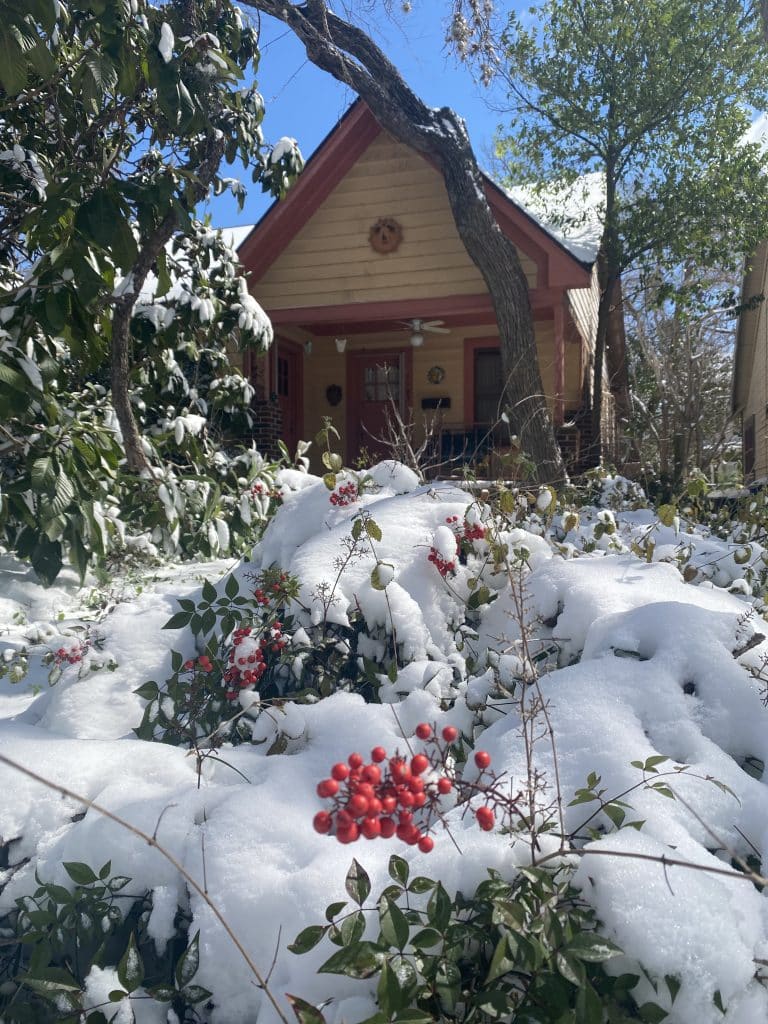
My husband and I met in my native Mexico City and decided to settle halfway between the Midwest of his youth and my central Mexico roots. Whenever we consider moving, we can’t quite figure what could possibly be better than this walkable neighborhood so close to downtown. We enjoy a backyard brick oven and a sauna. Perhaps someday we’ll move, but this 1,500 square-foot bungalow still serves us well.
Our children’s tree-like placentas are buried in our yard. We planted our daughter’s in the front yard under a Mountain Laurel sapling and our son’s in the back under a young Elm tree. Just as they have grown into kind, compassionate adults, their trees have weathered many seasons. We have set deep roots here, four decades and counting.
The My Austin Vida community essay series highlights the Austin Latinidad experience and invites community members to share their experiences through the lens of resilience. This project emphasizes amplifying local stories, offering a platform for individuals to tell their own narratives, whether in writing, photos, videos, or other formats. Read more here if you are interested in writing an essay for My Austin Vida.
Correction: A previous version of this story misidentified the songwriter for the featured lyric in the essay. It’s Juan Gabriel.
Author
Related Articles
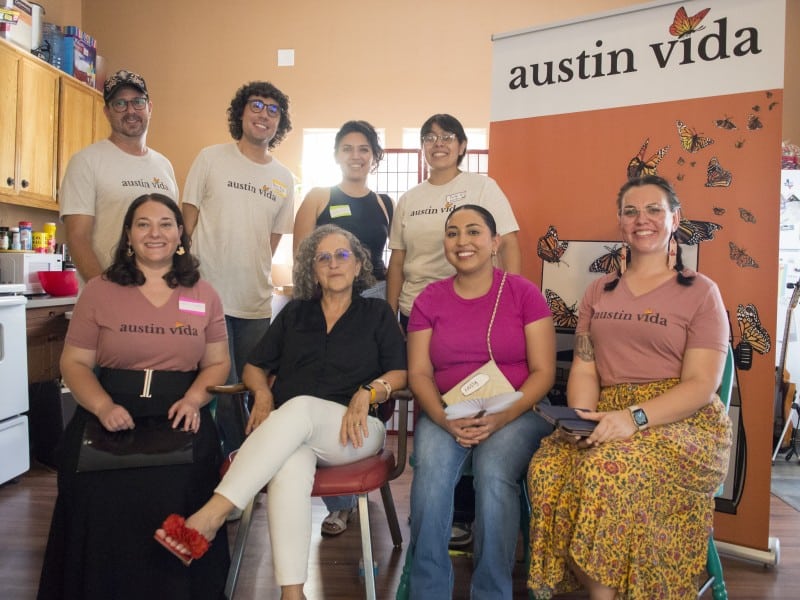
PHOTOS: My Austin Vida, Historias of Resilience Personal Essay Reading Event
Our essayists shared their experiences of identity, community, belonging, and Austin Latinidad through the lens of resilience.

My Austin Vida: How Finding Community, Courage Helped Me Survive College
Overcoming imposter syndrome and guilt as a first-generation college student demanded brave, transformative steps toward discovering a sense of belonging. This personal essay is part of the My Austin Vida community essay series highlighting the Austin Latinidad experience.
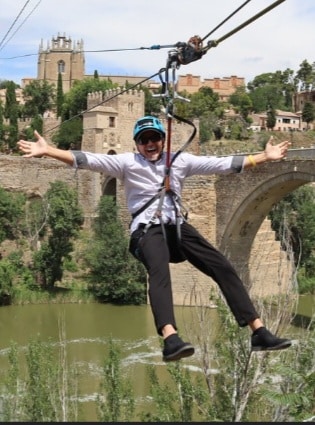
My Austin Vida: Mi Vida es un Zip Line Ride
How a life-changing trip to Spain sparked reflection and connection to ancestors. This personal essay is part of the My Austin Vida community essay series highlighting the Austin Latinidad experience.