
My Austin Vida: How Finding Community, Courage Helped Me Survive College
Overcoming imposter syndrome and guilt as a first-generation college student demanded brave, transformative steps toward discovering a sense of belonging. This personal essay is part of the My Austin Vida community essay series highlighting the Austin Latinidad experience.
The first day of freshman college orientation I felt guilty for not shedding a tear. My throat felt heavy but I remember trying to gulp down feelings of sadness when my parents were saying goodbye to me at the St. Edward’s University campus in the fall of 2019. They were crying and I was trying my best not to let one tear fall. It was my way of showing my parents that I would be okay.
I’m the first one in my family to attend a four-year university. As a first-generation college student and daughter of Mexican immigrants, I had no idea what to expect. I was excited. I was also afraid. Not just of moving from a small Texas Panhandle town to Austin, but also, I was afraid to fail.
At orientation, one of my peers asked me, “How are you not crying?” I looked around the room and saw everyone’s eyes red, I heard their deep sighs, and suddenly I felt guilty. My parents probably thought that I was glad to finally be leaving them, which was not the case. I wondered if I made the right decision: should I have just cried with my parents so that they knew I would miss them? My tears would have let them know a part of me wished I could stay in Friona.
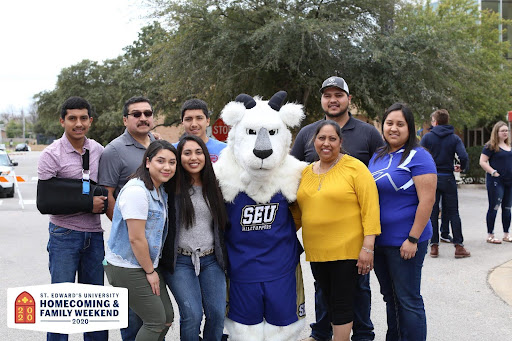
I never really knew what career I wanted to pursue until I was in high school. When people would ask me what I wanted to be when I grew up, I would answer that I wanted to be like my parents. I admired them for doing their best to provide for us. My dad worked as a chuck boner at a beef packaging plant and my mother spent her summers in the fields as a migrant farmworker. I didn’t know how demanding their jobs were as a child because they always talked and played with us with a smile on their faces. I’m grateful that I got to grow up in a small town. I was friends with most of my peers and got to live through each milestone with them. I liked that everybody knew each other and you could find support anywhere you turned. I loved the feeling of a tight-knit community. I loved Friona.
Back in Austin, on days when self-sabotage would grip me, I’d think: Should I have gone with the safer choice of West Texas A&M University and roomed with my best friend? Should I have let someone more deserving, smarter, and braver receive the College Assistance Migrant Program (CAMP) scholarship at St. Edward’s?
I was looking for ways to feel bad about my new college life in Austin because I felt guilty for leaving Friona and leaving my family. I felt guilty that I was the first child in my family to successfully leave my hometown. Logically, I knew my CAMP scholarship would open many doors of opportunity and I should be happy. But, I still experience guilt from time to time, especially when someone accuses me of hating Friona. I knew that choosing journalism as a career means that I have to stay open minded. I have to be willing to relocate for job opportunities. This means that, even if I wanted to, it won’t be so easy to return home. I try to find the big picture when I feel guilt. There was a reason why I chose to go to St. Edward’s and move to Austin. I knew it wouldn’t be easy as a first-generation student, but I knew it would be worth it. And I know that I shouldn’t feel guilty for pursuing my dreams – no one should.
While navigating my guilt, I also juggled with imposter syndrome –a term I only learned after confiding in a peer mentor that I felt like my failure was inevitable. That feeling magnified in the fall of 2021 during the return to in-person classes and I received the worst grades of my academic career. I felt like I was losing myself.
I knew I needed to find something that would make me feel like I belonged. I needed to find a place where I felt comfortable being myself. The first step I took was to attend the involvement fair on campus. I signed up to join clubs on campus, hoping that along the way I would find one that I loved. I looked for ways to connect to my roots and culture, which is what helped ground me.

I have always loved dancing, but joining ballet folklórico was intimidating to me because of my lack of experience with folkloric dance. One of my friends, who was already a part of the ballet folklórico club, told me that he didn’t have any experience before either, which motivated me to join. Folklórico was a way for me to move my body and get lost in the music. I felt happy when I was dancing. I also decided to join the Latinx Student Leadership Organization, which provided a safe space for me to talk about my feelings. I surrounded myself with other students experiencing similar issues. Hearing their perspectives showed me that I wasn’t alone. Imposter syndrome doesn’t discriminate; it can affect anyone. I was lucky enough to already have a community at St. Edward’s through the CAMP program where I was able to talk to other migrant farmworker students who had similar experiences. They, too, had parents and family who had to move because of agricultural work. Even though my older siblings had taken courses at a community college, they had a vastly different experience than the one I was having. They lived at home and were able to come back to a place where they felt comfortable each night. I lived seven hours away and had to seek that safe space on my own.
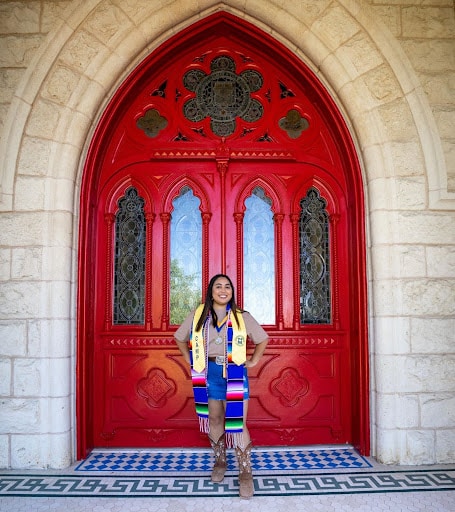
The best thing I did for myself was to build my confidence because it helps me overcome the negative feelings. Building my confidence wasn’t easy. It was like two sides of me were battling for control, the one that constantly tried to put me down and tell me that I wasn’t worthy, and the one that knew that all of my accomplishments were a result of working for it. I constantly told myself that I was good enough. I still give myself affirmations to remind myself that I’m smart and that I’m worthy of anything I dream of. I also decided to take every mistake as a learning lesson, instead of giving up and letting myself feel like a failure.
I felt lost in a big city like Austin, but I grounded myself by finding ways to connect to my community, looking for support, and celebrating myself and others.
The My Austin Vida community essay series highlights the Austin Latinidad experience and invites community members to share their experiences through the lens of resilience. This project emphasizes amplifying local stories, offering a platform for individuals to tell their own narratives, whether in writing, photos, videos, or other formats. Read more here if you are interested in writing an essay for My Austin Vida.
Author

Related Articles
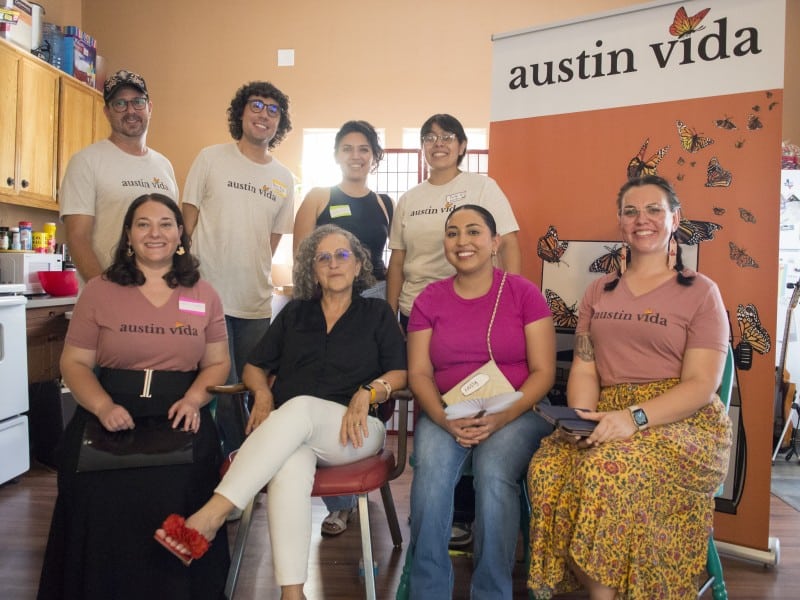
PHOTOS: My Austin Vida, Historias of Resilience Personal Essay Reading Event
Our essayists shared their experiences of identity, community, belonging, and Austin Latinidad through the lens of resilience.

My Austin Vida: When I Felt Like I Belonged Here
How a young Mexicana evolved with Austin. This personal essay is part of the My Austin Vida community essay series highlighting the Austin Latinidad experience.
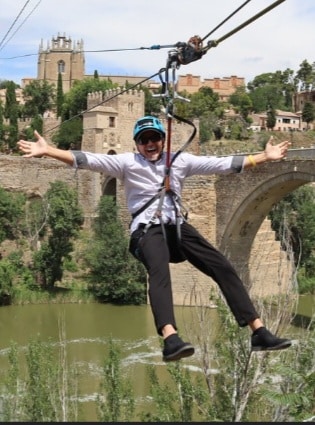
My Austin Vida: Mi Vida es un Zip Line Ride
How a life-changing trip to Spain sparked reflection and connection to ancestors. This personal essay is part of the My Austin Vida community essay series highlighting the Austin Latinidad experience.