
How Reggaeton Helps Boost Mental Health Healing
A UT reggaeton dance club transforms movement into medicine for minds navigating the pressures of college life.
Support for Austin Vida’s mental health coverage is made possible by the Ortiz Therapy Group.
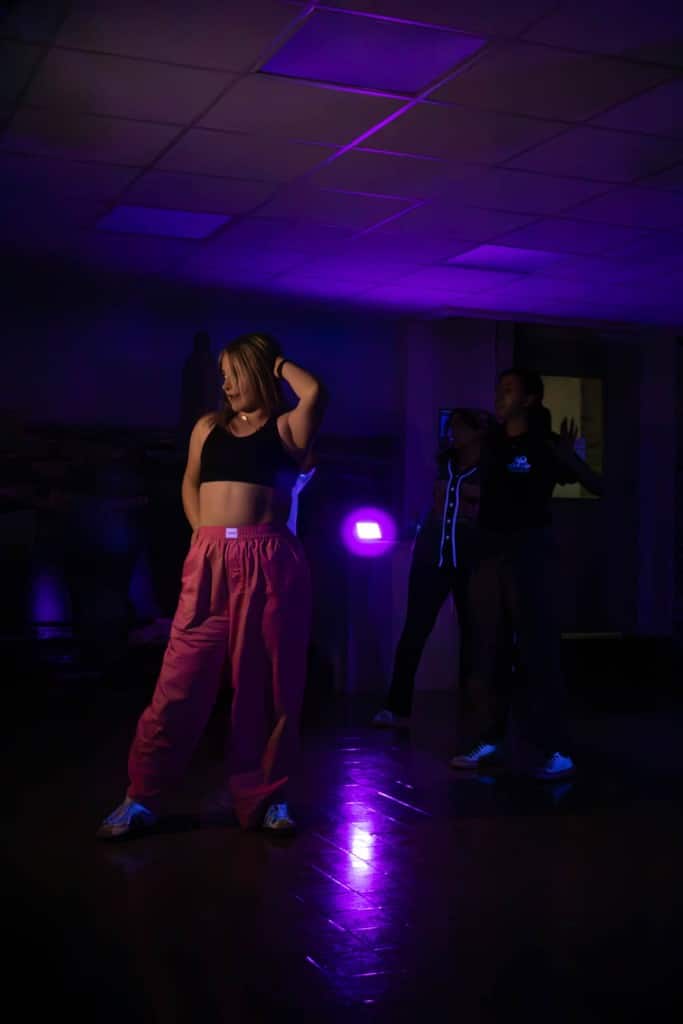
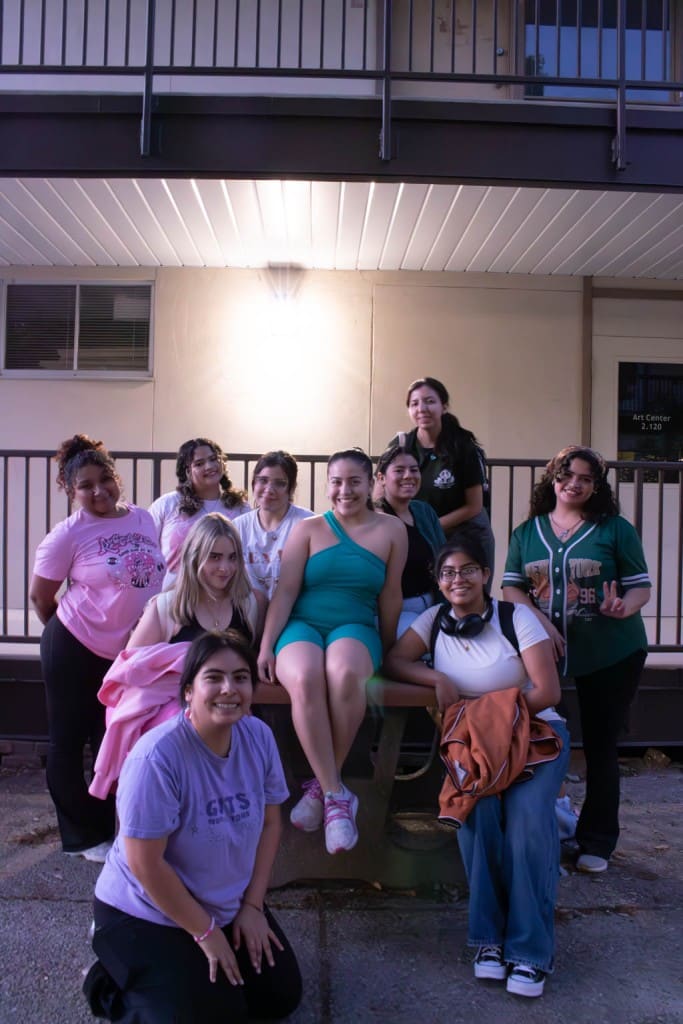
In a small studio on the University of Texas campus, a group of students gathered twice a week not just to dance, but to heal. Members of The Reggaeton Dance Club (RDC) tossed their backpacks to the perimeter of the fluorescent lit room before forming a circle at the center.
Laysha Gonzalez, who founded the club in 2022, began the discussion by inviting members to share about their week, their day or anything on their mind.
As they took turns sharing triumphs and struggles, heads nodded in understanding, hands reached out in support, and the camaraderie was palpable. The studio has become more than a place to learn choreography—it’s evolved into what members describe as a healing circle.
“The Reggaeton Dance Club is a product of my mental health,” explained Gonzalez, a senior from Laredo. After experiencing trauma, including PTSD and the aftermath of sexual assault, Gonzalez sought conventional treatments—therapy, psychiatry, medication—but she felt something was still missing.
“I had to think to myself, what else could I possibly do or add into my life to really help me feel complete?” she recalled.
The answer emerged from her cultural roots and personal passion: dancing to reggaeton music, a vibrant expression of Latino culture that offered both physical release and community connection. What makes this group unique is its intentional focus on mental well-being.
“We make it a point to check in with all of our members and see how they’re doing,” said Yazmin Gil, a club officer. “We want to check in with everyone and make sure that everyone’s doing okay, which is really nice because…most of the time people don’t even ask you how your day’s going.”
According to the Healthy Minds Study, in 2020–2021, more than 60% of students met criteria for one or more mental health problems—a nearly 50% increase from 2013. As the mental health crisis on college campuses continues, innovative approaches like the Reggaeton Dance Club offer unique ways to feel supported.
Raphael Travis, a professor at Texas State University who has a doctorate in public health and studies the connection between hip-hop culture and well-being, explains why such artistic expression is powerful for mental health.
“In terms of the arts there are lots of things that contribute to well-being, but we know that our experiences with the arts can play a major role,” Travis said. “For example, when you engage in certain music, it evokes memories. And so there’s that nostalgic element like you listen to a song and it takes you back to a certain moment.”
For many members, the group provides critical stress relief during hectic college life. Kristelle Rodriguez, a freshman who joined during her first semester of school, describes it as a sanctuary.
“I feel like dance is my stress ball every time I’m stressed or I just feel insecure,” Rodriguez said. “Dancing could become very stressful, but thankfully here at UT, this is a very safe space.”
This aligns with research on the arts and mental health. According to the 2025 State of the Arts Report, dance and music therapies can significantly impact psychological well-being. Music therapy can decrease PTSD symptoms by 30%, while attending cultural events monthly can reduce depression risk by 48%, according to the report.
For junior Issa Correa, who had no previous dance experience, the group has helped address body image concerns.
“I know it’s a dance group, it’s active work, but it has helped me with body issues and mental health relating to body issues,” Correa said. “It just makes me feel more in tune with my body.”
The club’s motto—”shaking ass for a cause”—captures its unique blend of fun and healing. “It makes sense for us, especially now more than ever as Latinos, to want to communicate and connect through our body,” Gonzalez said.
Travis, the professor who studies hip-hop culture and well-being, notes that dance and music can help people process difficult emotions.
“There’s also emotional resonance where there’s a certain feeling that is expressed either in the lyrics or the music itself that you connect to,” Travis said. “You may connect to it in a certain way or it may intensify that sadness or happier or whatever, but there’s that emotional connection that aligns with how you’re feeling in a given moment.”
The club creates space for members to be vulnerable without pressure. Members can perform if they wish, but there’s no expectation to do so.
According to Travis, the club’s communal approach to healing acknowledges the complexity of mental health.
“It’s not just how I feel about something or think about something or think about myself, but it really is a complex set of interactions between a person and their environment, and that’s a big part of what I’m interested in,” Travis said.
For Gonzalez, the group represents a full-circle journey from trauma to healing—and now to helping others heal.
“And so with us, I feel like it took the representation and it just took the space of being safe to me, myself and who I really am–that creates a safe space where they’re like, oh, wow, I can actually open up because somebody else did,” she said. “So it’s just a cycle of healing.”
As Travis puts it, these five dimensions of empowerment—esteem, resilience, growth, community, and change—appear naturally in dance and artistic expression.
“I envision dance as capturing both that individual empowerment as well as that community empowerment,” he said. “And then collectively, if within that dance there is some identification, if there’s a community element, whether it’s around race or ethnicity or gender or a geographic community, there’s that collective element that is possible as well.”
By combining cultural connection, physical movement, and emotional expression, these students have created something powerful—a community where healing happens through celebration.
LEARN MORE:
Find the UT Reggaeton Dance Club on Instagram @rdc.ut.
For students struggling with mental health challenges, resources are available through the National Alliance on Mental Illness (NAMI), which offers peer support groups, educational programs, and a helpline (800-950-6264).
A message from our Mental Health sponsor:
At Ortiz Therapy Group, we’re passionate about people sharing their stories and acknowledge the privilege it is when they’re shared with us.
En Ortiz Therapy Group, nos apasiona que las personas compartan sus historias y reconocemos el privilegio que es cuando las comparten con nosotros.
Author

Related Articles
Mental Health Ofrenda: How Empathy Can Be Window Into Comunidad
When we care for one another, we begin to heal not just individually, but as a comunidad. Austin Vida mental health columnist offers places you can start during challenging times.

Mental Health Ofrenda Holiday Edition: Sharing Humanidad Across Differences
As families gather this holiday season, we reflect on balancing mental health and finding connection across differences.
Mental Health Ofrenda: Remembering Our Inner Child
In moments of fear, worry, or uncertainty, we can turn to the joy and playfulness of our inner child as a guide toward healing and hope.