
My Austin Vida: Mi Vida es un Zip Line Ride
How a life-changing trip to Spain sparked reflection and connection to ancestors. This personal essay is part of the My Austin Vida community essay series highlighting the Austin Latinidad experience.

Toledo, SPAIN —“I want to walk by the river and ride the zip line.”
“You really want to do that?” Max, a fellow student, asked me.
“Yes!”
“Let’s go.”
We left the crowd of tourists behind in the town square and immersed ourselves in the tranquility of the Rio Tagus. The living water put our minds at ease. We maintained our steady pace on the trail as the water sped over the small waterfalls. I breathed in fresh air like meditation.
Max and I followed the wooded path to the 14th century pedestrian bridge Puente de San Martin. The zipline we saw on the bus from Madrid to Toledo was visible in the distance. Several flights of a stone stairway took us from the river bank up to the bridge. We reached the launch site for the suspended rides across the river. I paid the 14 euros and suited up with a helmet and harness.
“I’ll skip the zip ride and watch,” Max said.
The friendly attendant hooked my harness to the steel cable and sent me flying with, “Venga vale. Buen viaje!”
A momentary pang of fear crept in as I stepped off the platform. I rarely fear heights, but death? Yes, I often fear death. Exhilaration replaced el miedo as I rode high above the wide rio. Cool wind hit my body and blew away the tiredness from the three-mile hike. The 100-yard zipline flight was over in the blink of an eye, like the past 65 years of my life. The feelings and emotions I experienced daily – anxiety, fear, excitement, and joy – surged through me all at once. Like in life, I pushed against the negative emotions as I rode that zipline and was rewarded with the positive ones.
I did not die from the zipline ride, nor the two days in a row of heart attacks I had seven years ago in Austin, Texas. As I was wheeled in for heart surgery, the fear of death was on my wide-awake mind. The surgeon, Dr. Francisco Otero, a Spaniard, put me at ease with his calm and confident demeanor. He saved my life and allowed me to experience the joys of this trip to the birthplace of some of my ancestors and Dr. Otero’s.
On the footbridge in Toledo, Spain, I was flooded with gratitude. I felt happy, proud, and thankful that I survived. I realized it is essential not to take this life and the extra days gifted to me for granted. Gracias to the creator por todo.
Max was waiting for me. He handed me his phone with the video of me flying over the water.
“Wow! Gracias for capturing the moment, amigo,” I said.

My two weeks in Spain were part of a travel writing class. My goal was to learn and write about my connection to Spanish culture. Quería conocer la gente de mi sangre. I want to learn more about myself before my ride on this planet ends. A sense of urgency was and is still present. Soy un viejitz and I know that every day counts.
I was born in Houston. I grew up living not only in Tejas but Califas, New Mexico, and Arizona, too. My family’s connection to Mexico, much less to Spain, was rarely, if ever, talked about. It was too distant from our collective past. Our unique Tex-Cal-Mex-Chicanx culture emerged after generations of living north of the Rio Grande and across the ocean from Spain.
Salas is my last name. Mom’s maiden name is Vela. From my abuelas, I have the names of Guerrero and Zepeda and from the great grands Botello and Sierra. These names have origins in Spain. I also have ancestors that were native to the Americas. The Spanish conquistadores and priests erased those names and attempted to eliminate indigenous culture from my heritage.
Salas is the plural of sala. It means a room or space where families and communities gather to socialize. Madrid, like the meaning of my last name, is full of places where people do exactly that. Families and groups of friends of all ages are outdoors, day and night. They walk or sit together to talk, eat, and drink, often past midnight. Tables and chairs fill the wide sidewalks. Countless restaurants, cafés, panaderias, ice cream shops, and tapas bars occupy the bottom floors of their apartment buildings. Their abundant public social interactions seem to relieve the stress visible in many big American cities. I didn’t see angry or mean people like I often do in Texas. Instead, people greeted each other with hugs and cheek kisses. I heard, “Hola Tio, cómo esta?” The smiles and laughter were contagious.

It was a flurry of activities in Madrid, in the country of my Spanish ancestors, who were the conquistadores of my native Tejano antepasados. While there, I walked, saw the sights, wrote, visited museums, took classes, talked, ate, and slept a bit. At times, I was joined by classmates, professors, or my new Spanish friends. Many things I did alone. The older I’ve gotten, the less social I’ve become. Maybe I need to reverse that. The activities and the Spaniards I met kick-started, in a good way, a change in my feelings about my connection to Spain.
Trees, flowers, and various plants grow everywhere, even on the sides of old building walls. I recognized many trees and plants, like the ones in my yard in Austin, Texas. All the natural greenery allowed the air to carry the scent of pine trees, magnolias, and roses. It reduced the exhaust from all the vehicles clogging the narrow streets.
The building walls echoed the Spanish language, music, and infectious laughter. Jazzy words, “vale, guapa, chaval, tio, tia, chico, y pos nada,” punctuated the rapid speech. I noticed that Spaniards ate copious amounts of bread, potatoes, ham, and pastries. They drank wine and beer. Many smoked cigarettes. It was mid-June, and the sun set around 9:30 p.m., but they stayed out until they had their fill.
The Spaniards I met were friendly and happy to answer questions. They included Ramon, Anna, Nephtali, some middle school students, two kind-hearted elderly women, a polite father and daughter, and the lovely Professor/Poet Imaculada (born and raised in Spain but lives and teaches in New York). Cultural connections grow with respect, compassion, and our willingness to love. Between us we planted some semillas de cultura y comunidad. I felt the seed of connection sprout. I want it to keep growing.
One day at the Feria de los Libros in Retiro Park, my classmate Leah and I met a group of shy, respectful middle school students. I asked them what comes to mind when someone mentions the United States.
“Libertad!” a boy replied. Then he asked if I had seen the Statue of Liberty and told me, “Tengo una Tía que vive en Boston.”
“What comes to mind when someone mentions Texas?” I asked.
“Armas!” Another boy answered. Switching to an indoor voice, he asked about the school children murdered in Uvalde.
“Era un hombre con armas? Es verdad que todos tienen armas?”
His question made me realize that these children thought all Texans carry guns.
It hit me hard. I held back tears. “Casi que si, pero yo no tengo y no quiero armas.” My answer made them smile.

Spain conquered the Americas con armas, but few Spaniards now own guns. The gun owners do not keep the weapons in their homes and there are fewer murders per capita are committed in Spain than in the U.S.A.
“Do students go to school in big yellow buses and have blond hair, like I’ve seen in some books?” One boy asked. His question changed the mood and made us laugh.
“Some do, pero no todos,” I answered. They smiled. The boys told me they either walk to school or ride the metro. They agreed that riding a yellow school bus would be more fun.
Conquistamos con amor y paz, no con armas. The Spaniards learned this lesson well. Their society became better for it. I hope I have learned this lesson and can live the days I have left, putting it into practice and setting an example for others. It is never too late for us to live better lives and help make life better for others. From now on, I will be more social and spend more time in salas.
The positive outcomes of confronting my fears and taking on the risk of a zipline ride or conquistando Spain con amor y paz far outweigh the negative possibilities. Amor y paz les deseo a todos.
The My Austin Vida community essay series highlights the Austin Latinidad experience and invites community members to share their experiences through the lens of resilience. This project emphasizes amplifying local stories, offering a platform for individuals to tell their own narratives, whether in writing, photos, videos, or other formats. Read more here if you are interested in writing an essay for My Austin Vida.
Related Articles
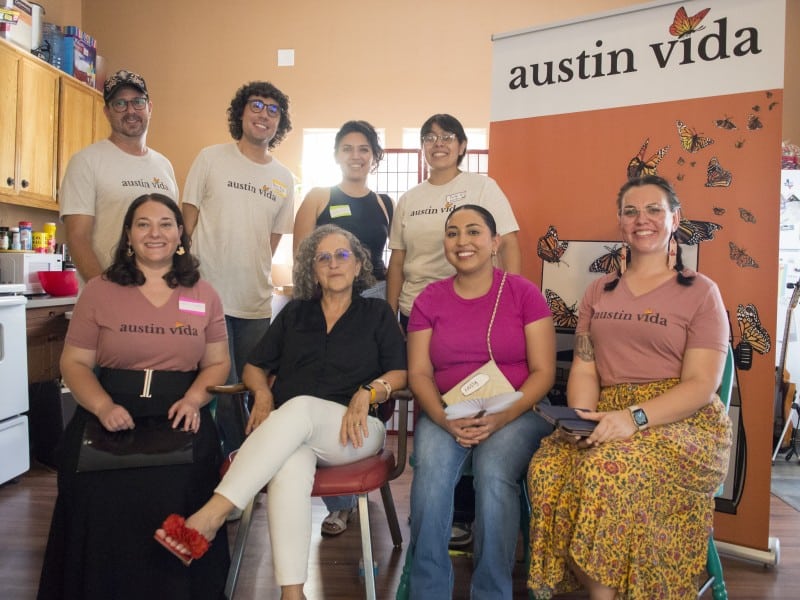
PHOTOS: My Austin Vida, Historias of Resilience Personal Essay Reading Event
Our essayists shared their experiences of identity, community, belonging, and Austin Latinidad through the lens of resilience.

My Austin Vida: When I Felt Like I Belonged Here
How a young Mexicana evolved with Austin. This personal essay is part of the My Austin Vida community essay series highlighting the Austin Latinidad experience.

My Austin Vida: How Finding Community, Courage Helped Me Survive College
Overcoming imposter syndrome and guilt as a first-generation college student demanded brave, transformative steps toward discovering a sense of belonging. This personal essay is part of the My Austin Vida community essay series highlighting the Austin Latinidad experience.