
Spotlight On: Claudia Chapa, Austin Opera’s Curator of Hispanic and Latinx Programming
In 2022, Austin Opera announced the Butler Fund for Spanish Programming, a $3 million endowment to support Spanish-language programming. The historic gift also funded the appointment of Claudia Chapa as the company’s first curator for Hispanic and Latinx programming.
Parts of this interview originally aired on the “Austin Cultura” radio show, a partnership between Austin Vida and KUT 90.5 FM. You can listen to the show during the first Friday of the month or catch it online here. Interview has been edited for length and clarity.

In 2022, Austin Opera announced the Butler Fund for Spanish Programming, a $3 million endowment funded by Austin philanthropists Sarah and Ernest Butler to support Spanish-language programming at the company in perpetuity. The historic gift also funded the appointment of Claudia Chapa as the company’s first curator for Hispanic and Latinx programming.
We caught up with Chapa about her life as not only a curator but opera performer and what kinds of programming to expect as the Austin Opera creates more space for diverse voices and stories.
AUSTIN VIDA: You’re a highly sought after mezzo soprano opera performer, but can you take us back to Laredo, where you grew up? How does a border girl become immersed in the opera world?
CLAUDIA: I am lucky I had an upbringing where music was really prominent and dancing was really prominent, but not classical or European-centered classical music. That wasn’t really something I was exposed to.
But I was always in choir. It was a great way for me to make friends. I didn’t know English at the time, so it was a great way to communicate the universal language of music, and I just kind of kept at it. It kept me out of trouble. I kind of grew up in a rough part of Laredo, a lot of gang activity, so it just kind of kept me in line in a lot of ways.
And then, I graduate. I don’t know what to do. I joined the choir at the community college. And that’s where it began, this whole door-opening journey for me that turned into a career. Darlene Wiley (educator and performer) from the University of Texas came down to do a master class in Laredo, Texas. And she said, well, I think you can really do this as a career.
So I began my journey of trying to take up a space that I didn’t think was designed for a person like me, and there were a lot of no’s and not you, and we’ll see how it goes. But I was very persistent. I want to call it magic. Those are the things in life, these things that we can’t really describe. It just happens. And you either take the opportunity or you don’t. Now, I am the Hispanic and Latinx curator for the Austin Opera. They’ve been instrumental in my life.
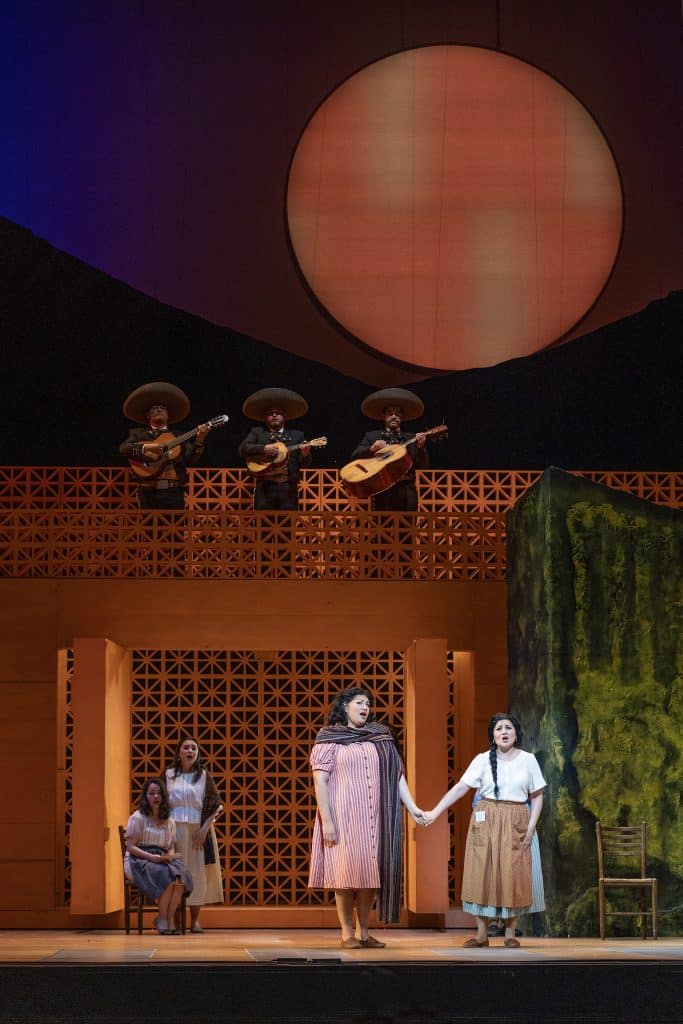
AUSTIN VIDA: So, very Latina question. What did your parents and familia think?
CLAUDIA: It’s nice, but it’s not a career. It doesn’t look like a tangible thing. You become a nurse, a teacher, go to the Army, join the border patrol. There’s a couple of options. At least in Laredo. That’s what I had. And none of those made sense to me. I didn’t want to do any one of those things.
They didn’t know how to support me, and now they understand what I do. But it was a little rough the first couple of years.
KUT: Were there any barriers you experienced to catch up with others who had been raised in the classical tradition of this art form?
CLAUDIA: When I transferred to UT, I realized there are a lot of young people already doing this. They already did music theory classes, piano classes, and voice lessons. I’m late, and not only am I late, I’m not affluent. I do not come from lots of resources.
My parents have done everything they can for me with the limited amount of resources they’ve had. At that point, they said, we can’t do much for you after this. You want to go to the University of Texas. We love it. We can’t help you financially and I couldn’t ask for that help, honestly. So really one of the barriers was resources. It’s a huge gatekeeper. But that doesn’t get in the way, at least for me, I’m going to figure it out. I’m gonna earn money. I’m going to do it.
It is a tradition within the classical realm that maybe someone will give you a scholarship to help you out. And that’s what I did. I sang for anyone that would listen to me.
I also had a lot of self-doubt. I’m not sure how I’m going to do this. I’m learning on stage. I’m learning with my colleagues who have been doing this longer than I have. I’m playing catch up. So that was really intimidating at the beginning.
But, of course, for some reason you have to be a little bit delusional in anything that you want to do. You have to believe in yourself more than other people believe in you. I heard a lot of no’s, I heard you need to lose weight in order for you to do this job, or I don’t think it’s for you. You should change your career. No, it didn’t stop me. Why? I’ve been self-sufficient since I was 18 years old. You’re not paying my bills. I’m going to do this. I’m going to try to do this if I fail it’s on me. Not because you said it to me. So. Yeah.
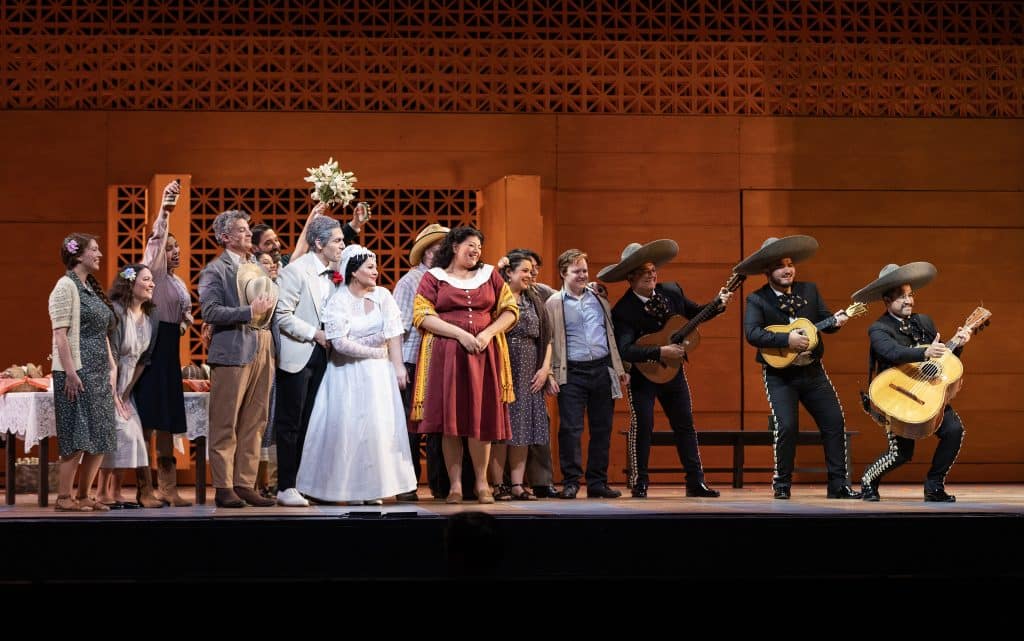
AUSTIN VIDA: What was it like to navigate that opera world as a Mexican woman?
CLAUDIA: I’m really proud of my younger self. I got a lot of no’s. I still hear them. And then, I’ll get a message from someone who was in the chorus, or someone that was in the orchestra, or someone who was in the crowd saying, “It was really great to see someone like you on stage.” It’s not really just about me. It’s the greater good.
I also don’t just represent a Mexican woman. I represent someone that was undervalued for a long time. I represent an immigrant. I represent someone who did not grow up in an affluent environment. And I’m here in what people think is usually very bougie – like the opera, you know, nose up, only these people come to this. No, it’s for everyone. I’m in it. It’s for everyone.
AUSTIN VIDA: What upcoming programming are you excited about?
CLAUDIA: The big exciting thing that we’re doing is an Opera ATX Residency for Latinx Creatives. We’re going to offer funds, offer space, offer resources for young creatives to write stories, our stories, from their viewpoint as well as multi-generational Latines.
So we’re giving the opportunity to other Latines to say, tell me what you think. Tell me what you feel. Write it down. Let’s do a workshop so you can see what works and what doesn’t work. We’re excited to be able to offer that space to them. And we’re the only ones doing it, really in the United States. This initiative is a monumental one for the opera industry and for Austin, Texas, history.
But we can’t lose the fire. We’re the only ones doing this for Latines stories, but there are other programs out there who focus on other BIPOC communities that want to tell their story. And it’s happening. So it’s in the next five to ten years, you’re about to rethink the idea of opera, American opera.
Because what do you think about American opera? You think only about a certain demographic. It’s not including all of us. All of us, actually, make America. I’m excited in the next five to ten years what that operatic canon is going to look like for us.
Author

Related Articles
Como la Flor, Still Blooming
Through art, fashion and photography, “The Selena Effect” exhibit at The Wittliff Collections captures Selena Quintanilla’s essence for all generations and celebrates a spirit that still inspires today.
5 Ways to Kick Off Hispanic Heritage Month in Austin 2025
From film festivals to cultural showcases, there are plenty of ways to honor National Hispanic Heritage Month 2025 in Austin.
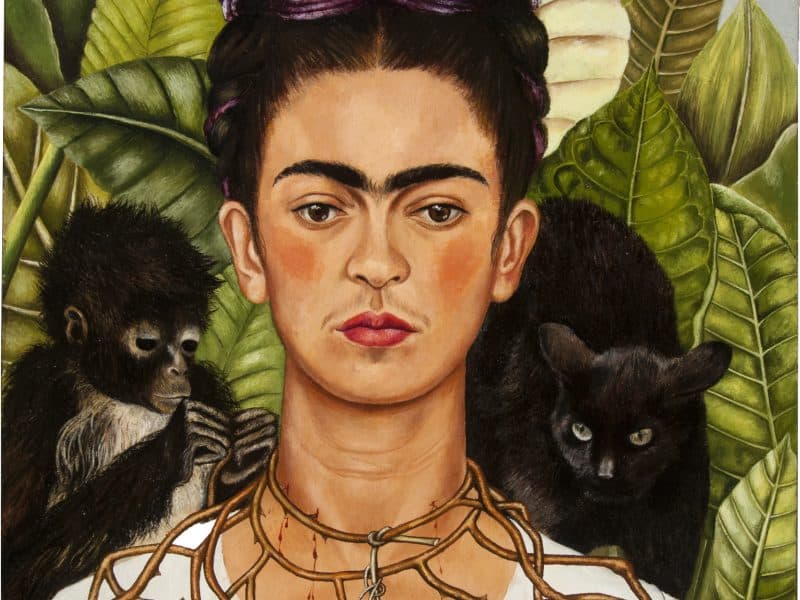
Iconic Frida Kahlo Self-Portrait Returns Home to Austin
View “Self-Portrait with Thorn Necklace and Hummingbird” at the Harry Ransom Center from August through early January 2026.