
Como la Flor, Still Blooming
Through art, fashion and photography, “The Selena Effect” exhibit at The Wittliff Collections captures Selena Quintanilla’s essence for all generations and celebrates a spirit that still inspires today.
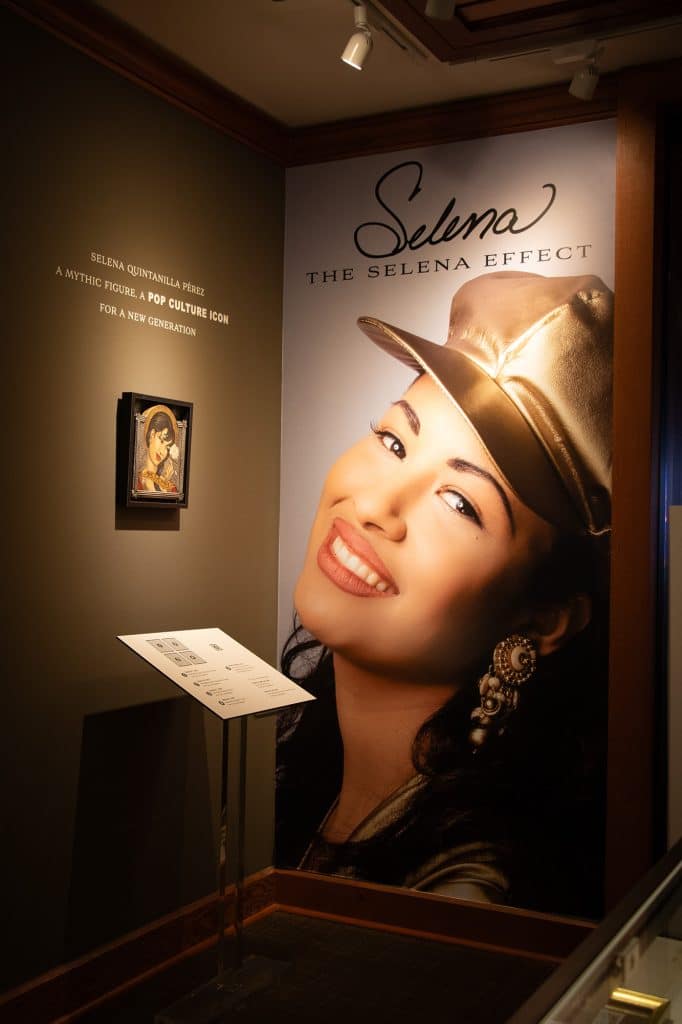
Selena Quintanilla is more than just Tejano music royalty — she was an artist, designer and reflection of the Mexican American spirit. All of these versions of Selena can be seen at “The Selena Effect,” a new exhibit that runs through December 2026 at the Wittliff Collections on the Texas State University campus in San Marcos.
What began in 2022 as a collection of never-before-seen photographs from Al Rendón, John Dyer and Ramón Hernández expanded into much more, gaining attention from visitors of all ages. Héctor Saldaña, music curator for the Wittliff Collections, noticed how younger generations connected deeply with the photographs.
This fall, the Wittliff kicked off “The Selena Effect” exhibit with a special event featuring Selena’s fashion designer and confidant, Martin Gomez, as guest speaker. Music, laughter, tears and inspiration filled the room.
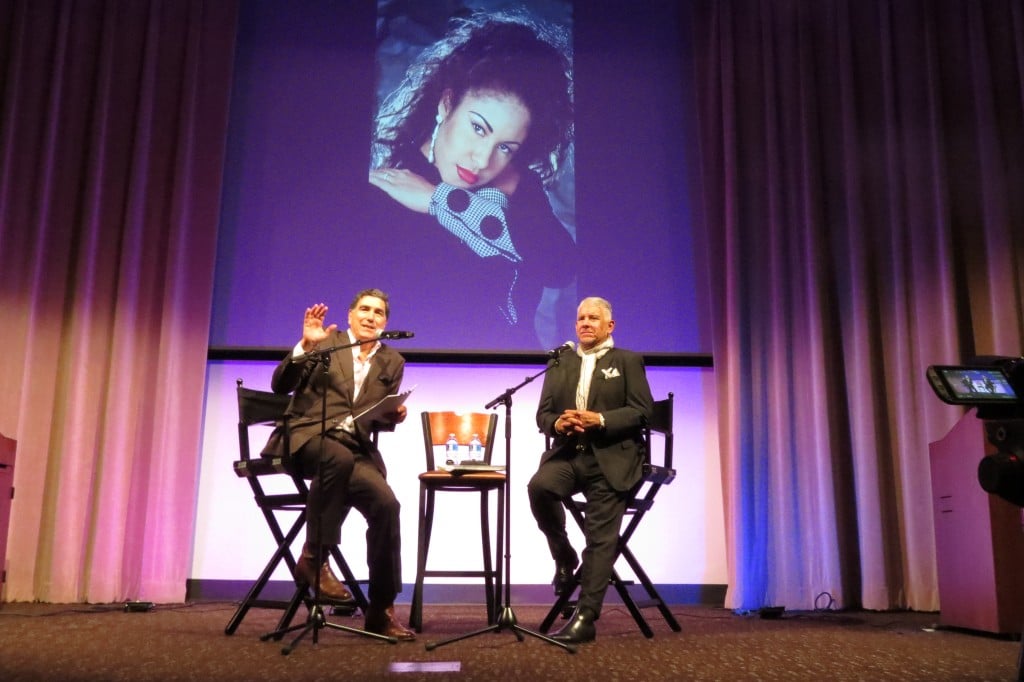
San Juanita Vasquez, a mariachi music education senior who performed with Texas State’s Mariachi Nueva Generación that night, grew up listening to Selena. She remembers her mom talking about how much she loved the singer and dreamed of owning one of her designs.
“To me, Selena is an example that women can succeed in what used to be a male-only genre,” Vasquez said. “I appreciate her artistry and feel honored to represent our pride in our culture through music.”
Saldaña said his focus for “The Selena Effect” was exploring what Selena means to present and future generations, and for people who weren’t alive to witness her in action but still feel deeply connected to her story.
“When you think of Selena in the present tense and what she is going to mean to future generations, it’s that she’s a true icon of pure joy,” Saldaña said.
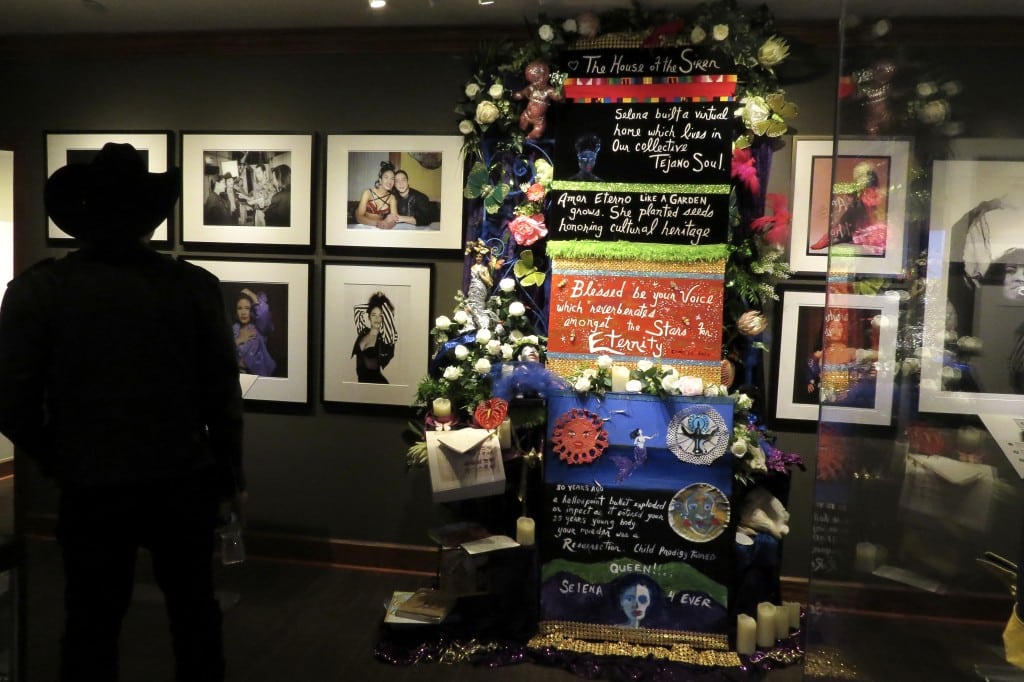
In addition to photography, the exhibit brings art and fashion into the forefront. A tall, colorful altar, created by Mexican American artist David Zamora Casa, greets guests as they walk in. It’s inspired by Día de los Muertos traditions and adorned with books, butterflies and flowers.
“I thought it’d be nice to ponder that joy Selena brings from the artist’s point of view, from the community,” Saldaña said.
A striking portrait of Selena by Marc Burckhardt — painted on wood and outlined in metal — hangs alone on one wall. The image, featured on the cover of Texas Monthly magazine in 2010, was one Saldaña was especially proud to include.
“His depiction of Selena was almost like a religious Madonna,” Saldaña said. “It had this sort of spiritual kind of quality.”
Fashion and design also play a central role in the exhibit. Two outfits, worn by Selena and designed by Gomez, are displayed behind glass. The garments come from Gomez’s personal collection and are being shown publicly for the first time.
“It’s incredible to be part of such an incredible legacy,” Gomez said. “And now I feel that it’s the proudest thing I’ve ever done.”
Gomez met Selena in June 1993 while having lunch at a cafe inside a Woolworth department store in Corpus Christi. He was instantly captivated by her look and presence as she walked in a black catsuit with a belt, high ponytail and boots.
At the time, Gomez didn’t know about her music or fame. Selena learned he was an executive trainee at Dillard’s and a fashion designer. She gave him her number and asked him to call. He didn’t.
“She was a massive star, and I showed up in the picture and didn’t call her back,” Gomez said. “I think that’s what sparked the relationship.”
Selena later went to Dillard’s to find him, determined to collaborate. While Gomez was hesitant at first, their shared love of fashion quickly brought them together.
“She could see I can illustrate really fast, and then I can sew it. I can make patterns,” Gomez said. “The relationship just happened naturally, where we would just play with fashion.”
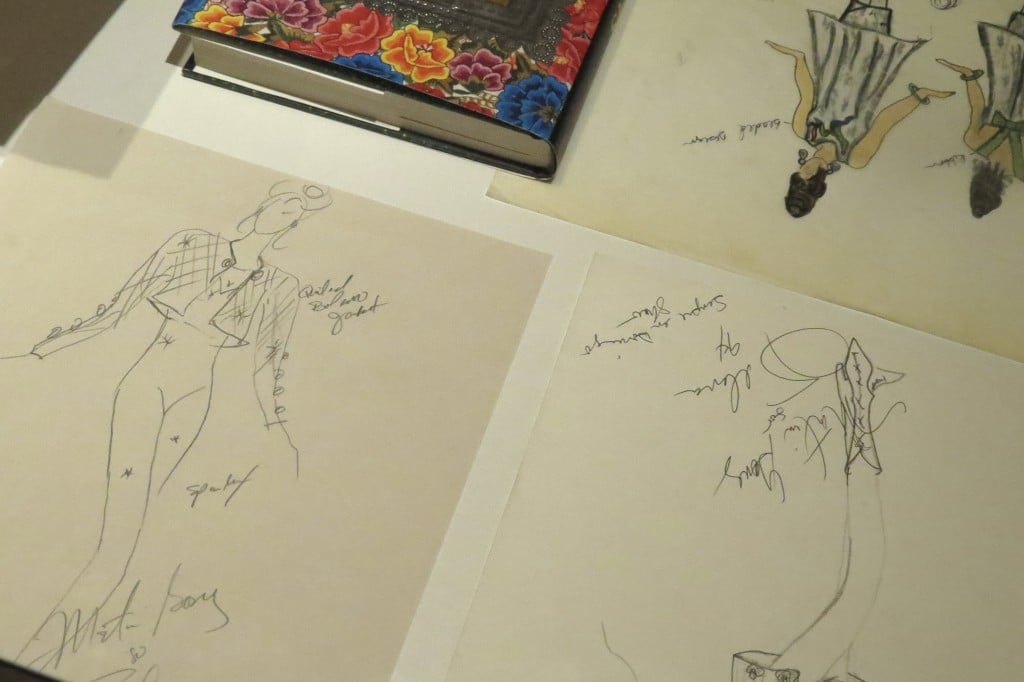
Over meals and late-night calls, Selena and Gomez dreamed up sketches and plans for a fashion line that would express her creativity beyond the stage.
“For her time, it’s crazy how she had such a clear point of view on what she wanted to do and create,” Gomez said.
Sketches of their designs and photos of them working together were projected during the Wittliff event.
“It started with Cher,” Gomez recalled. “I remember telling her Cher would create these images, and Selena wanted to do that.”
Their final project focused on creating volumes of color, a dream left unfinished after Selena was fatally shot in Corpus Christi on March 31, 1995.
In the nearly two years they worked together, Gomez said Selena embraced his ideas and spirit with kindness and trust.
“She had seen me for me, because no one had ever seen me,” Gomez said. “I see the human. I see the girl that I love. I don’t see the concert, I see the broken nail she had that day.”
IF YOU GO:
WHAT: “The Selena Effect” Exhibit
WHEN: Now through Dec. 11, 2026
WHERE: The Wittliff Collections at Texas State, 601 University Dr.
San Marcos, TX
MORE INFO: Visit The Wittliff Collections to learn more about this and other upcoming exhibits and programming.
Correction: A previous version of this story mistakenly noted where Gomez and Selena met and where the fashion designer worked. They met at a cafe inside a Woolworth department store. Gomez, at the time, worked at Dillard’s.
Author
Related Articles

5 SXSW 2026 Artistas to Add to Your Playlist
In honor of Women’s History Month, we’re highlighting some fierce female performers who performed at South by Southwest and should be on your playlists.
Mexican Director Jonás Cuarón’s film “Campeón Gabacho” premieres at SXSW
Red carpet moments highlight a powerful story of migration, struggle and self-discovery.
SXSW 2026 Films that Ask: What Does Moving Forward Look Like for Nuestra Gente?
From Chicano rock legends to young bachata musicians and a trans couple preparing to welcome a child, several South by Southwest Film & TV Festival selections this year explore a shared question: What does it mean to keep going?