
How the Economy Furniture Strike Changed Austin’s Chicano History
Historical Preservation Austin hike traces the Economy Furniture Strike landmarks, where stories of resistance fight to survive amid luxury apartments and gentrification.
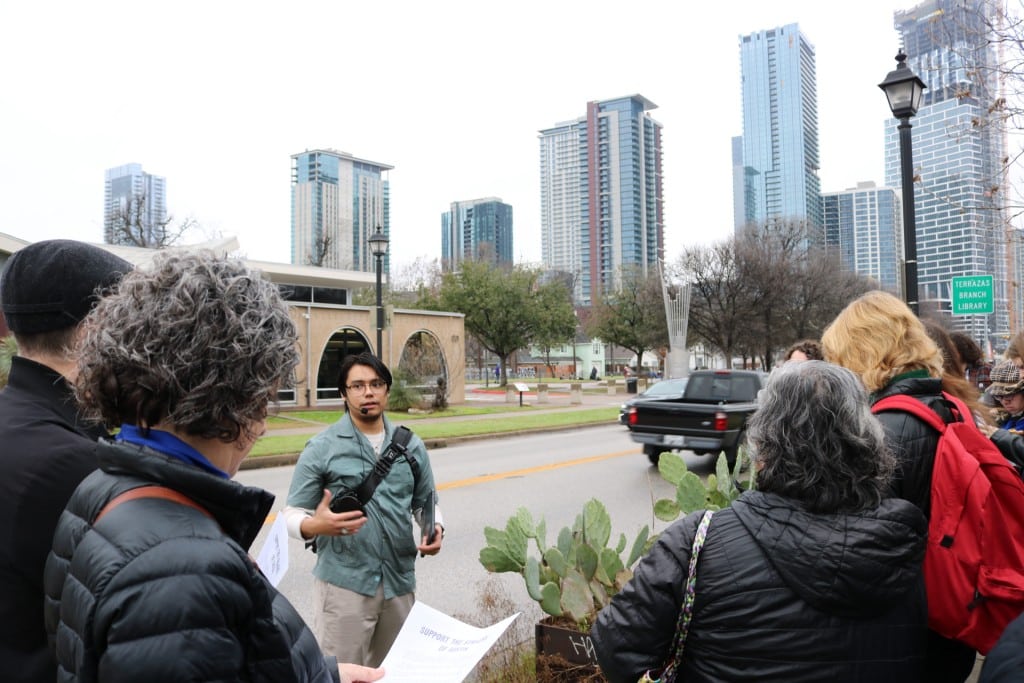
A modest house on Austin’s east side quietly preserves the legacy of what is widely considered Texas’s longest labor dispute. Inside, Mike Ruiz displays treasures that most Austinites have never seen—original footage of Mexican American workers on picket lines, artifacts from a three-year strike, and even a ziplock bag of sawdust from the factory floor where his father once worked.
The home served as a key stop on a recent two-mile walking tour of East Austin, where nearly two dozen community members explored a pivotal moment in Austin’s labor and civil rights history– the 1968-1971 Economy Furniture Strike.
The tour emerged from Texas State graduate student Matthew Medina’s master’s thesis research on Austin’s Chicano history, which he then developed into a preservation initiative while working as an intern with Preservation Austin.
The Tour’s First Steps
As Preservation Austin’s 2023 Underrepresented Heritage Intern, Medina was asked to identify buildings associated with the Economy Furniture strike, which helped shape East Austin’s Chicano activism in the late 1960s.
What he found instead was absence—demolished buildings, repurposed spaces with no acknowledgment of their history, empty lots where significant sites once stood, and modern high-rise developments tower over the remaining modest homes that once housed strike organizers.
The Economy Furniture Strike began in November 1968 when predominantly Mexican American workers walked out after Thanksgiving because of deteriorating conditions of the plant. The workforce was made up of 40% women.
“Your wage was tied to how much you were producing,” Medina said. “They didn’t have any maternity leave, and they also didn’t have a vacation policy.”
Over the next three years, the strikers built an unprecedented network of solidarity—connecting with UT students, organized labor across the country, and the emerging Chicano movement throughout the Southwest.
For longtime East Austin activist Susana Almanza, a march on Congress Avenue during the strike was a formative experience.
“Seeing that much ‘raza’ walking down Congress and for a cause like wanting what we call now a living wage, but back then better conditions, it was really an inspiration for me,” Almanza said. “That was really empowering to see that the people were working together and supporting the workers.”
A Look Inside
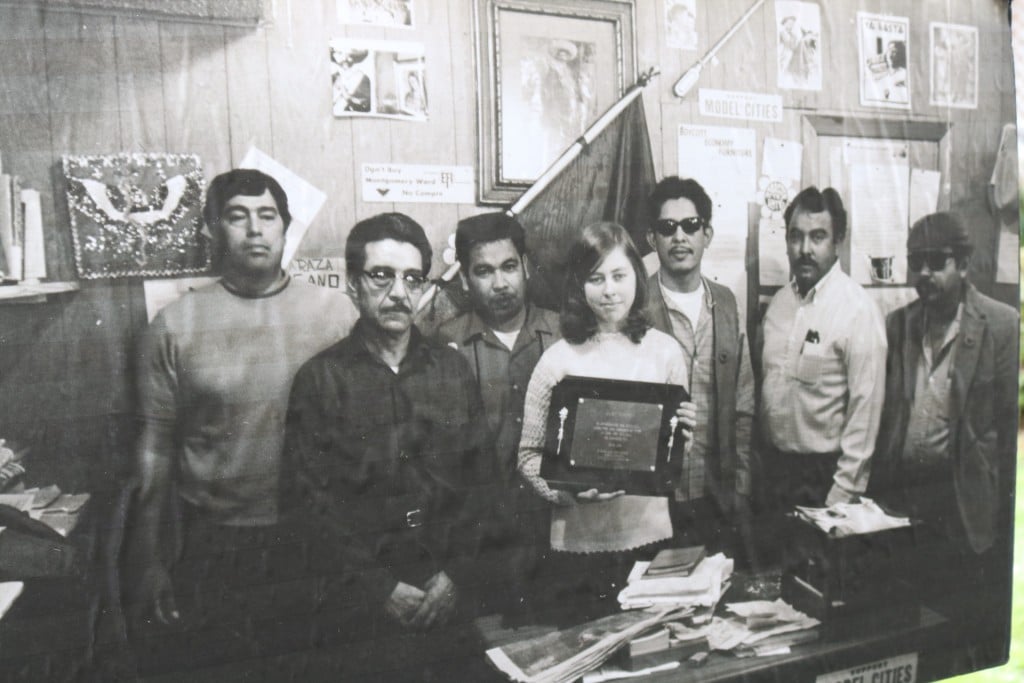
The centerpiece of the tour is a modest home belonging to Mike Ruiz, whose father Dan Ruiz was an Economy Furniture striker. Inside, Ruiz has created what amounts to a museum of strike memorabilia, proudly displaying artifacts that connect his family directly to this pivotal moment in Austin’s history.
“We have a real treat for this tour,” Ruiz said, gesturing toward a small screen. “I found some original eight millimeter footage of the strike, and we have it for display here. The videos are of strikers walking the picket line, and these are videos that haven’t been seen in over 50 years.”
As the footage plays, he references the bright red emblematic banner visible in one shot. “That’s the one that was made here in this house,” he said.
Now preserved at the University of Texas Latin American Collection, the banner holds special significance for Ruiz.
“I know my mother made it because of the way it was stitched– all the stitches are all over the place, just like how my pants used to look when she fixed them,” Ruiz said.
A collection of mementos on one table included campaign materials, strike buttons, union memorabilia and even sawdust from the factory floor.
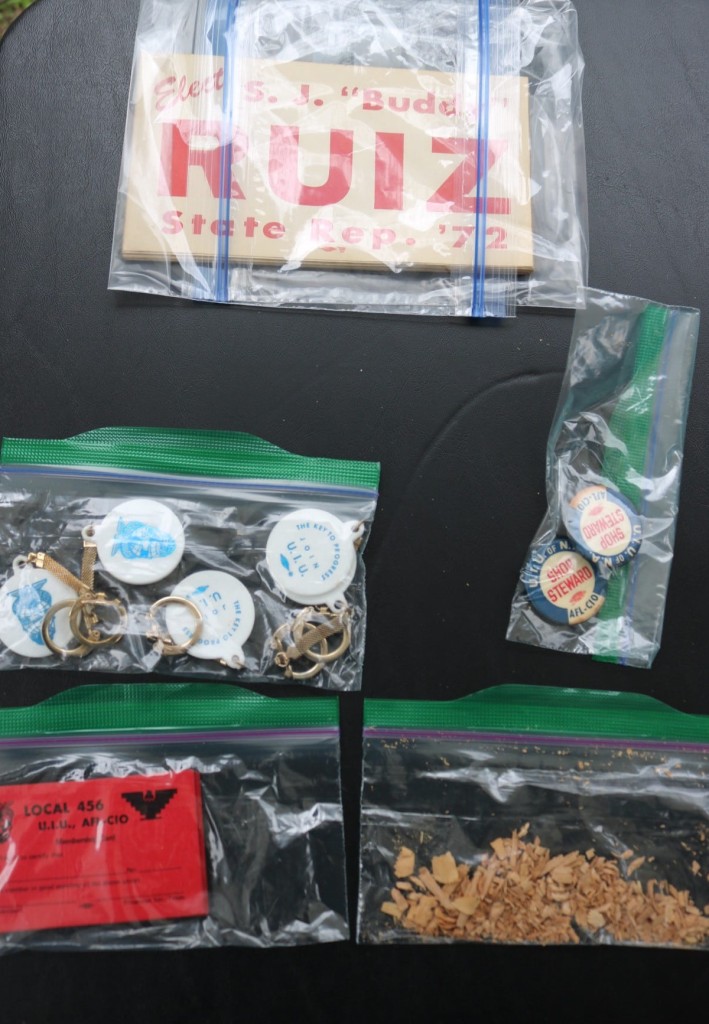
“This is actual sawdust from the Economy Furniture Company,” Ruiz explained. “When my dad was working, he would use knives to cut the wood to make the spindles for the furniture.”
Among these artifacts is the original Strike Shack in Ruiz’s backyard—a humble structure that once stood at the Economy Furniture plant, serving as command center for the strikers. From this shack, strikers coordinated picket shifts, distributed signs, and managed the strike fund that sustained families through the three-year labor action.
As the tour progressed through East Austin’s streets, Medina connected the dots between the strike and subsequent Mexican American political empowerment. Many of the East Austin Brown Berets, including Gilbert Rivera and Almanza, who remain prominent community activists, trace their political awakening to memories of the Economy Furniture Strike rallies.
Almanza, who later became a founder of PODER (People Organized in Defense of Earth and her Resources) and a nationally recognized environmental justice activist, described how the strike catalysed broader community organizing.
“It brought the community together, and it brought the leadership, too, together,” Almanza said. “It just opened the doors to so many things. How’s the housing? How is the environment? How is the education system?”
The group also visited the former residence of Richard Moya, who would become Travis County’s first Mexican American commissioner in 1970. Moya’s backyard housed what locals called ‘the Brown Machine,’ a printing press where he produced not just his own campaign materials but flyers for various East Austin causes.
Beyond The Strike Lines
Throughout the tour, Medina emphasized how the strike represented more than a labor dispute—it was the catalyst for a broader political and cultural awakening among Austin’s Mexican American community.
Almanza said her own activism evolved directly from this period.
“In the Brown Berets, that was another movement of youth, of young people,” she said. “Our whole thing in coming together and forming the Brown Berets was addressing education, addressing housing, addressing communications.”
This comprehensive approach to community issues grew directly from the solidarity fostered during the Economy Furniture Strike.
As Austin continues its rapid transformation, Medina’s work with Preservation Austin stands as a reminder that history isn’t just preserved in buildings, but in the collective memory of a community that once came together to demand dignity, fair wages, and recognition—and won.
For Mike Ruiz, preserving this history is deeply personal.
“Thank y’all for being here and taking an interest,” he told the tour group. “It makes my heart happy because I’m proud. I’m proud of what they did.”
Author

Related Articles
Adiós, Little Mexico Restaurant in South Austin
After nearly 40 years, Little Mexico restaurant on South First Street will close its doors.
A Call for Change: Austinites Challenge Austin Police on ICE Policy
Amid growing fears of ICE enforcement, Austin’s community and city leaders gathered to rebuild trust and push for new ways to seek help safely.
Know Your Resources | Conoce Tus Recursos
Una guía para conocer tus recursos con todo lo necesario, desde apoyo legal hasta asesoramiento.
A Know Your Resources guide with everything from legal to counseling support as the community navigates ICE activity.