
How Austin’s Sister Cities Keep Latin America Close to Home
Through music, food, and cultural exchange, Austin’s sister city connections bring Lima, Peru and Saltillo, Mexico a little closer to home.
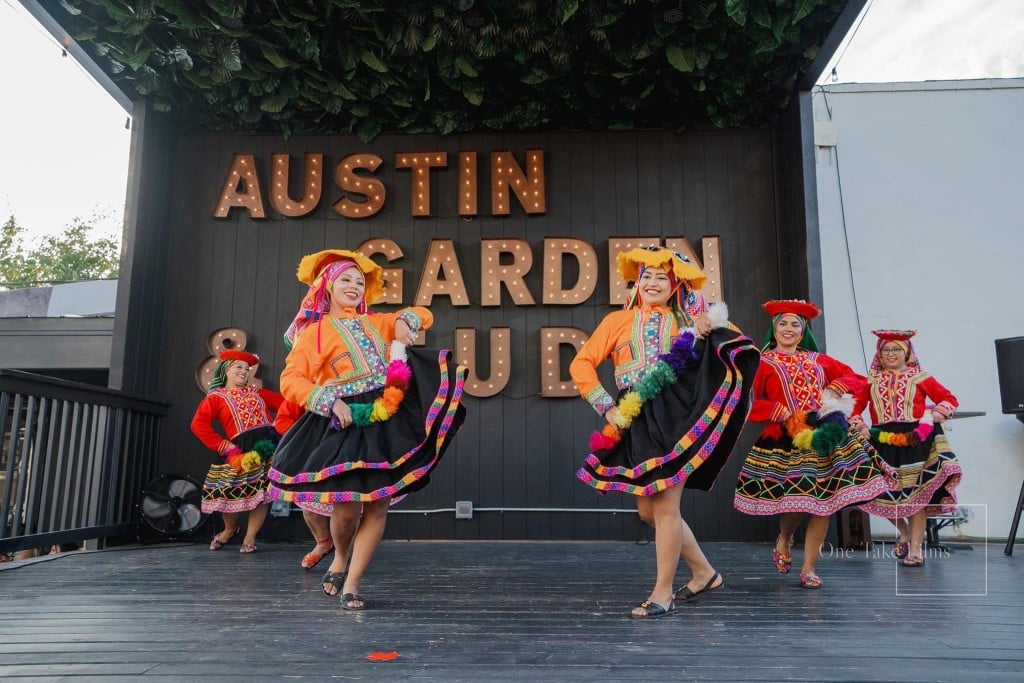
The sixth floor of Austin’s Central Library pulsed with the hypnotic rhythm of Andean pan flutes as dancers in bright, layered skirts spun across the floor. For two days, the library transformed into a celebration of Peruvian culture and a reminder that Austin’s ties to Latin America run deeper than geography.
“Perú Unveiled,” held this fall during Hispanic Heritage Month, drew hundreds of Austinites into an immersive experience of art, dance, film, and food. The event, organized by Austin-Lima Sister Cities, marked the volunteer group’s most ambitious project in years and showed how Austin’s sister cities relationships keep cultural exchange alive far beyond borders.
Deep Roots, Shared Purpose
Austin’s partnerships with Lima, Peru, and Saltillo, Mexico, stretch back decades. Yet for many Austinites, these sister city connections remain largely unknown, operating quietly in the background of civic life.
Fernando Nieri, chair of Austin-Lima Sister Cities, said the group’s mission centers on fostering “cultural, educational, entrepreneurial and humanitarian exchange between Austin and Lima.” Over the years, that mission has taken many forms: supporting grassroots agricultural projects outside Lima, mounting binational art exhibitions, and organizing musical collaborations with Lima’s Costa-Ornano Academy.
Austin’s connection with Saltillo runs even deeper. Saltillo once served as capital when Texas was part of the short-lived Mexican state of Coahuila y Tejas. In the 1960s, community leaders on both sides decided to formalize that shared history.
“The goal is to improve the lives of residents in both cities — exploring best practices,” said Ben Ramirez, president of the Austin-Saltillo Sister Cities Association.
Those best practices have included Spanish-language immersion programs for Austin firefighters and police officers, donations of equipment no longer meeting U.S. standards to Saltillo’s emergency services and joint city council meetings. In September, Saltillo’s bomberos completed two days of high-rise firefighting training with the Austin Fire Department.
From Vision to Celebration
“Perú Unveiled” opened with a screening of the film “Reinas,” followed by a weekend of programming across multiple floors of the library.
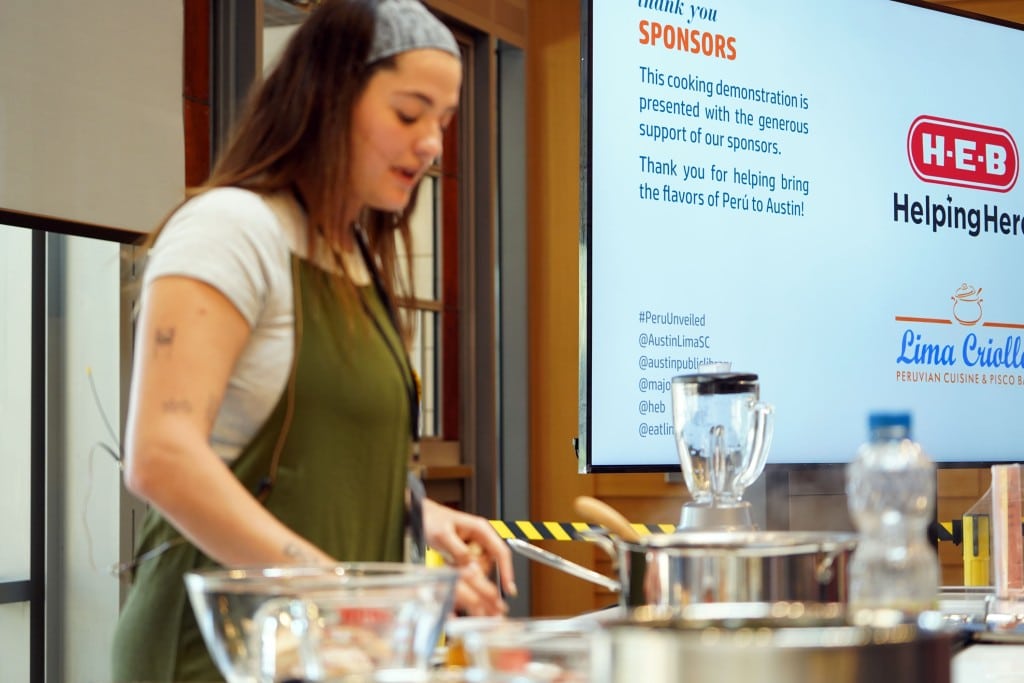
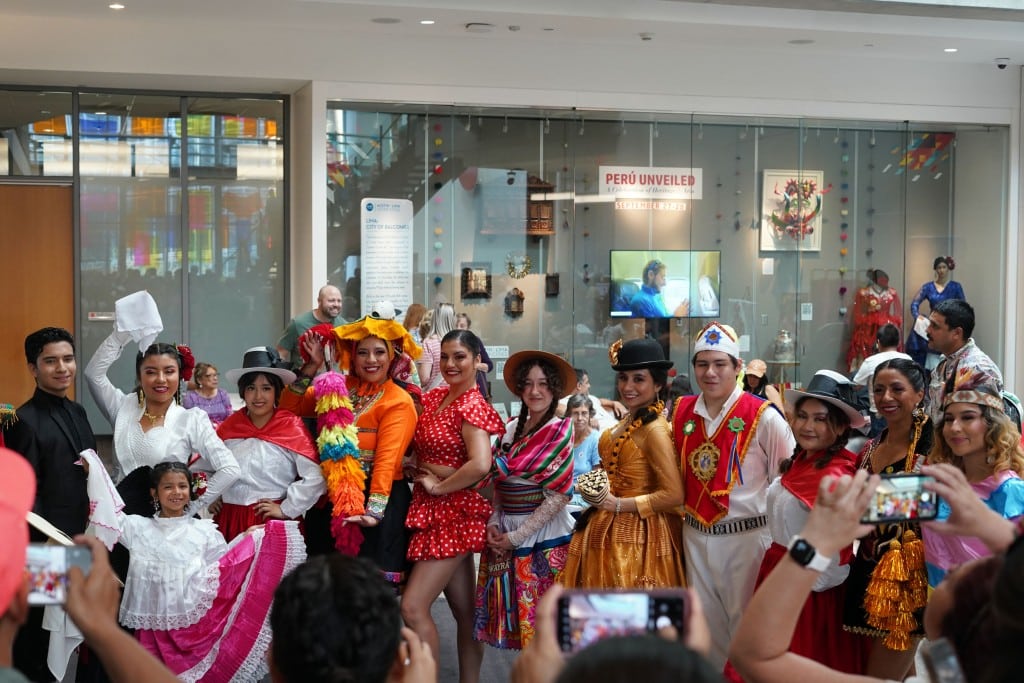
Traditional dances representing Peru’s costa, sierra, and selva regions – performed by Tusuy Sonqo, an Austin-based Peruvian dance company – filled the atrium. Cooking demonstrations drew more than 140 people. Actor Miki Vargas captivated bilingual families with a Spanish-language children’s play. And local musician Alex Marrero led a guided journey through Andean melodies, Afro-Peruvian rhythms, and cumbia amazónica.
Later, when Marrero played the song “Contigo Perú” by Arturo Cavero y Óscar Avilés, tears filled the room. “Había gente llorando,” Marrero said. He’d been told the song serves as Peru’s unofficial second national anthem, and watching the audience’s response reminded him of how deeply music can bridge belonging and memory.
While event planning, Angela Salas, vice chair of Austin-Lima Sister Cities, didn’t know what to expect.
“We were so anxious and we were like, are five people going to show up?” she said.
Instead, visitors flowed through the library in waves to check out everything from dance and music to cooking and film. Staff noted that a 25-foot-wide display of Peruvian textiles, instruments, and artifacts drew daily comments.
Some of the weekend’s most powerful moments were unplanned. On Sunday, during the cooking demonstration, volunteers sang “Happy Birthday” in Spanish to a Peruvian woman seated in the front row in her wheelchair. She was turning 100 years old, had lived in Austin for decades, and happened to have attended the same Lima high school as one of the organizers.
“It was just beautiful,” Salas said. “You couldn’t have planned it at all.”
Dancing Home
For Tusuy Sonqo Perú Artistic Director Elena Fiestas, events like this serve a profound purpose. The dance company, now three years old, was born from her childhood love of dance.
“Cada danza folclórica que presentamos es un pedazo de Perú,” Fiestas said. “Un reflejo de la variedad, la belleza y la esencia de nuestra querida nación.” Each dance we present is a piece of Peru, a reflection of the variety, the beauty and the essence of our beloved nation.
For Peruvians far from home, cultural events like this offer both comfort and connection. They’re also about planting seeds of curiosity in the broader Austin community.
Looking Forward
Both sister city groups are already planning what’s next.
On Nov. 15, Austin Sister Cities International will host its annual “Passports to the World” event at the Central Library, featuring all of Austin’s global partnerships. The free, family-friendly gathering begins with a parade from City Hall to the library and includes performances and cultural showcases.
The Lima committee hopes to make “Perú Unveiled” an annual tradition. Meanwhile, the Saltillo committee continues planning everything from cultural events to civic partnerships. “We want to see more Austinites engaged,” Ramirez said, noting the need for younger volunteers and fresh ideas.
Ramirez hopes that kind of engagement will keep growing across all of Austin’s sister cities groups. And it already is. That weekend at Austin’s Central Library, people danced, listened, and shared stories over music and food. For a moment, Peru was vividly, joyfully present and Austin felt just a little more connected to the rest of Latin America.
IF YOU GO:
WHAT: The annual Passports to the World event takes place November 15 at Austin Central Library (710 W. Cesar Chavez St.), free and open to the public.
MORE INFO:
Find out more about Austin-Lima Sister Cities by visiting austinlimasistercities.org.
Learn about Austin-Saltillo Sister Cities at austin-saltillo.com.
Author

Related Articles

Austin’s César Chávez March Canceled Following Abuse Allegations
Some city council members support renaming Cesar Chavez Street and will begin community discussions.
Chef José Andrés Shines Light on Power of Comida, Comunidad and Unexpected Heroism at SXSW
From the kitchen to the comic book page, José Andrés used his SXSW Hall of Fame spotlight to highlight the power of food, community and everyday acts of heroism.
Adiós, Little Mexico Restaurant in South Austin
After nearly 40 years, Little Mexico restaurant on South First Street will close its doors.