
What’s Next for Austin’s Historic Palm School?
Once a cornerstone of a Mexican American neighborhood, Palm School may find new life as alumni and community members work to reimagine its role in Austin. New oral history project helps document its past.
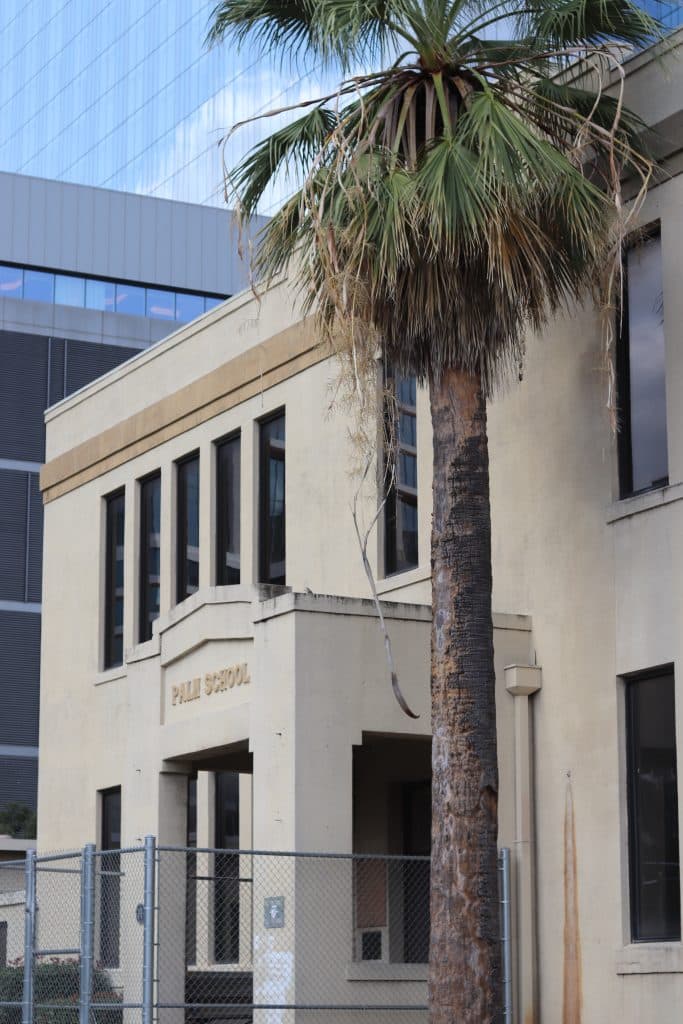
An old swingset, a palm tree, remnants of a stone structure and a vacant building sit off Interstate 35 in downtown Austin. At first glance, it may not look like much. It can be overshadowed by neighboring construction, the busy highway and the popular Rainey Street District. However, the building once sat in the middle of a bustling Mexican American neighborhood and welcomed one of Austin’s first elementary classes in 1892.
Although the front of the building still reads “Palm School,” the school that served East Austin communities closed in 1976. The building most recently served as Travis County’s Health and Human Services and Veteran Services building, but in 2020 the department moved to a different location. The building, left with some plumbing and maintenance issues, has been vacant ever since, said Selena Munoz, the county’s community and strategic engagement management director.
Helping drive the fate of the building is a recently-formed Travis County steering committee made up of longtime local Mexican American community activists, Palm School alumni, and representatives from partner organizations. They’re helping the county create a community engagement plan aimed at gathering additional public input to reimagine the Palm School. The core of its mission is to create a place that instills the school’s place in the community while staying within an economically feasible goal, Munoz said.
“We intentionally, sort of built into the selection process folks that we knew would be open to the community’s input, so that we didn’t come with trying to impose preconceived ideas on the committee,” Munoz said.
The steering committee began meeting monthly in spring of 2025. Although no definitive future plans for the building are set, previous community priorities came back loud and clear that the Palm School should be open to the public. The Commissioners Court approved that “redesign efforts should be focused on preserving the Palm School property, in a manner consistent with its identity as a historic resource, that the space and reactivating the building to serve community-focused purposes, such as cultural spaces, youth programs, high-quality childcare and community meeting spaces.”
CAPTURING PALM SCHOOL HISTORIAS
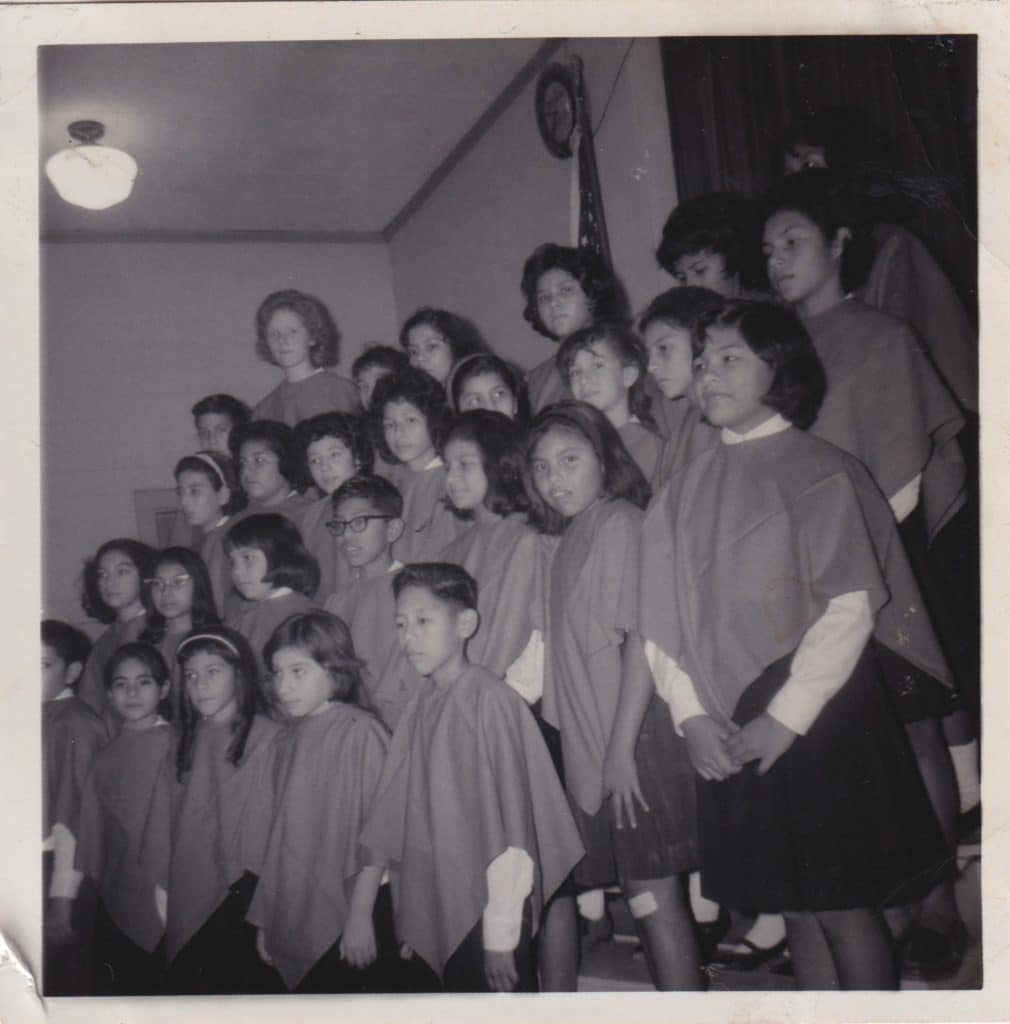
But before the county looked towards the future, it was important to document the past.
In an effort to help the community understand the school’s history, the county released the Palm School Oral History Project last fall on its website, featuring 15 alumni who share the Palm’s story through their own experiences. The project was created with the University of Texas at Austin’s Voces Oral History Project, which aims to record, preserve and share the stories of Latinas and Latinos in the U.S. at the national, state and local levels.
One of those alumni is cultural heritage specialist Hortensia Palomares, who started going to Palm School in 1959 and lived a few streets over in a neighborhood filled with her classmates and teachers. Her family had recently moved to the U.S. from Mexico, so she learned English from her classmates. She spent recesses outrunning all the boys in races in Palm Park, afternoons in the nearby pool, and she even watched the highway be built right next to her home.
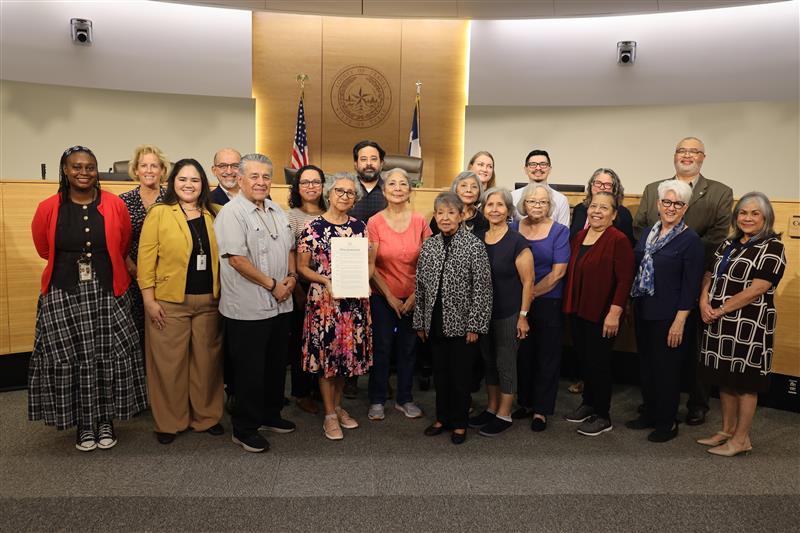
“The location is super important and is a gateway of East Austin, which is the cultural area that served the school,” Palomares said.
Palm Park, where the students often went for recess, is owned by the City of Austin, but Travis County has also prioritized in its planning process that the historical connection between Palm School and next door Palm Park remain strong.
Palm Park serves as a vital part of Waller Creek Conservancy’s plans to create a 1.5-mile parks district that already includes Symphony Square, Waterloo Park and Moody Amphitheater. Earlier this month marked the grand opening of it’s second phase called The Confluence, which spans 13 acres along Waller Creek between Fourth Street and Lady Bird Lake.
Now, all eyes are on the conservancy’s third phase which includes Palm Park. The conservancy has said that transformations to Palm Park aim to highlight family-friendly features and keep its historical ties to the Palm School. The revitalization project at Palm Park is expected to open in 2028.
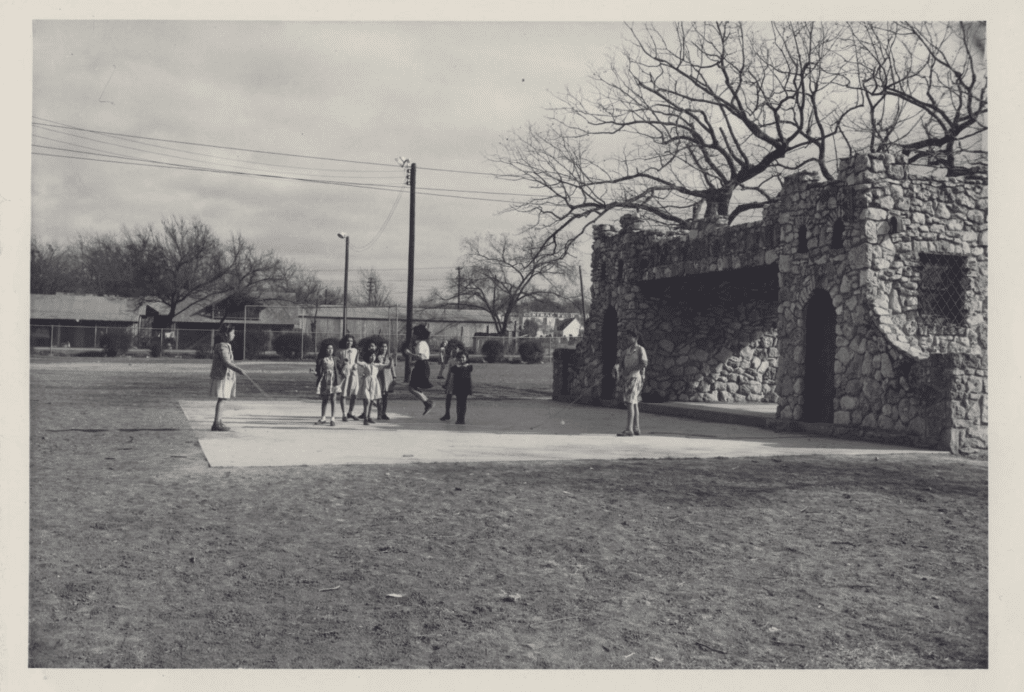
Palomares said although the park is now a broken-down stone wall with old playgrounds, driving past it still raises nostalgia. She said she remembers the stone wall, racing around the grass and celebrating her closest friends and neighbors birthdays at the park.
She often wonders what would have happened if she never went to Palm. She said she and her classmates ended up going to University Junior High, which most recently housed the University of Texas at Austin Steve Hicks School of Social Work before it was demolished in 2024 to create a new athletic training facility. They later attended Austin High School, which is the oldest continuously operating public high school in Texas, according to the Austin school district. During her time there, she watched the Chicano movement unfold in Austin, which drew her into the world of cultural preservation and activism — the thing she ended up dedicating her life to.
That’s why she helped round up alumni and community activists to reunite and create a shared vision for the new building. She said she does not know exactly what she wants from the new building, but she hopes that it serves the same community it did (decades ago), maybe through a history center or a cultural center.
“It’s us who are still here, who were here to give testimony through what we went through,” Palomares said. “We’ve lived several generations since we graduated. I have grandkids now. We have the opportunity to tell those stories and be able to shape and influence what happens there.”
MORE DETAILS:
Learn about the Palm School Oral History Project here.
Author

Related Articles
“Creating it for Ourselves”: Del Valle Residents Unite to Bring Community-Owned Grocery Store to Food Desert
After years of waiting, Del Valle residents will soon have a grocery store in the neighborhood. The Del Valle Food Co-op expects to launch in late 2026 and aims to make it easier for residents to access quality groceries and fresh food.
East Austin Barrio Landmarks You Need to Visit
Step into the rich tapestry of Austin’s Mexican American history with the “East Austin Barrio Landmarks” video series, inspired by a project and self-guided tour by Preservation Austin.
Austin’s Mexican American Cultural Center Reopens After Renovations, Expansion
After years of renovations, the Emma S. Barrientos Mexican American Cultural Center is finally welcoming la gente back home this June with an expanded space built to preserve our history for generations to come.