
A Call for Change: Austinites Challenge Austin Police on ICE Policy
Amid growing fears of ICE enforcement, Austin’s community and city leaders gathered to rebuild trust and push for new ways to seek help safely.
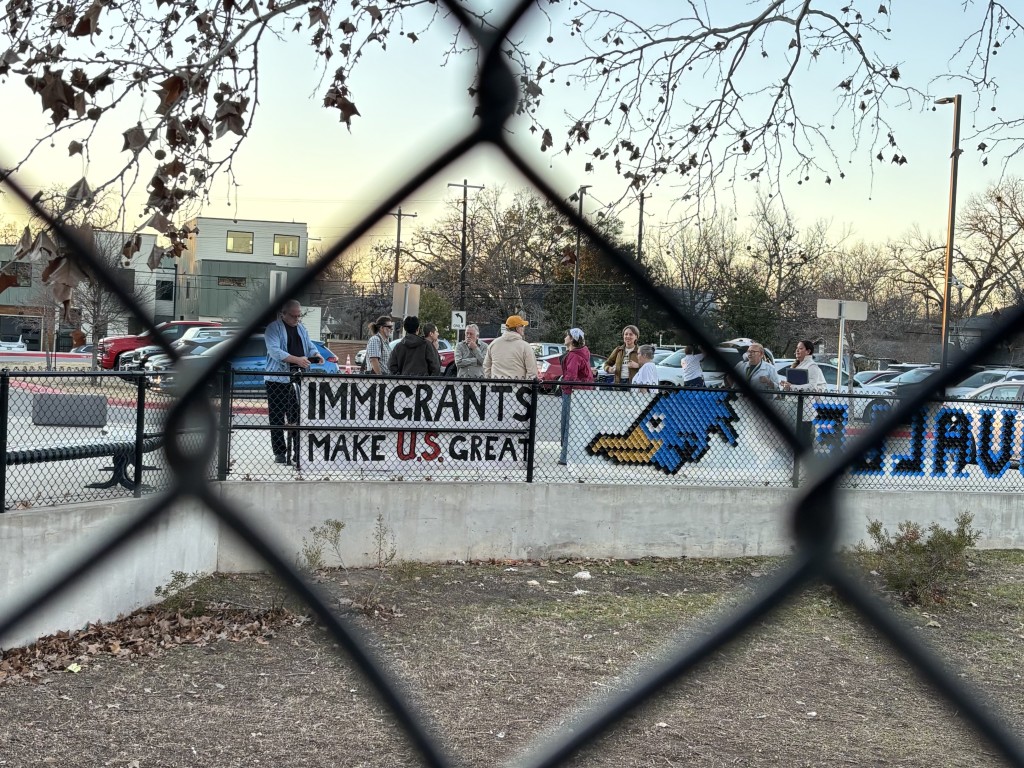
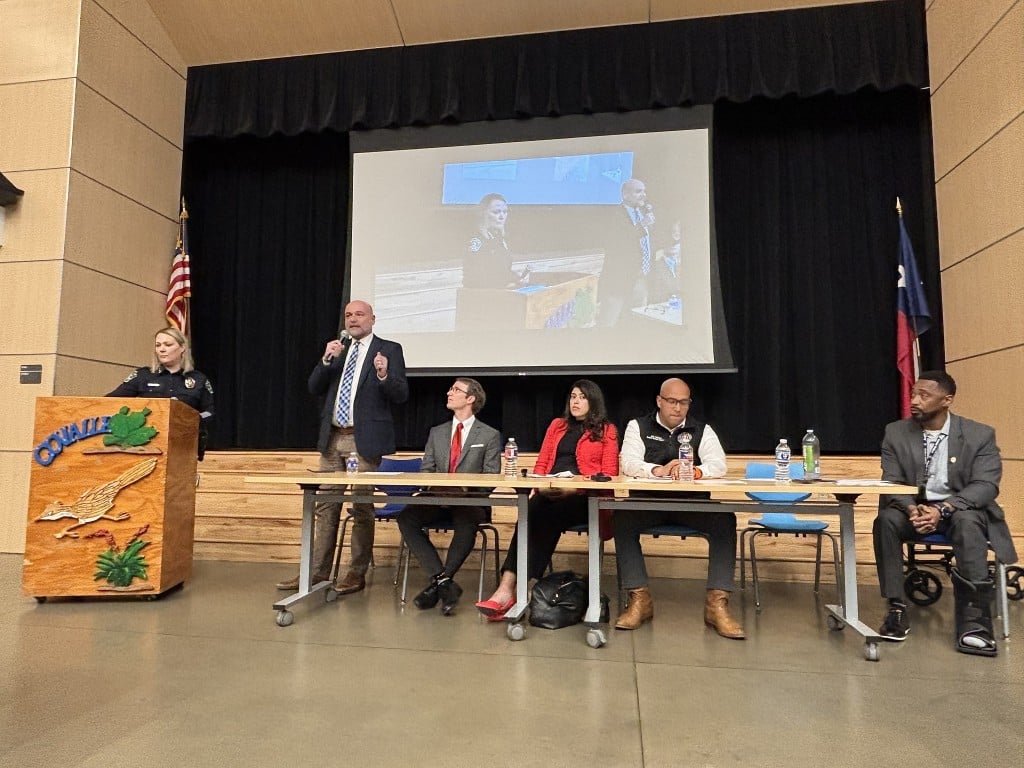
Concern and frustration filled the cafeteria last week at Govalle Elementary School, where three Latino Austin City Council members hosted a community conversation with Austin Police Chief Lisa Davis. The public meeting was meant to open dialogue about departmental policy regarding immigrants, but for many attendees, it became a space to question Davis’ trustworthiness and responsibility as fears have risen following the U.S. Immigration and Customs Enforcement’s (ICE) increased activity across the country.
The heated community conversation in East Austin’s Govalle neighborhood came shortly after the detention and deportation of Honduran mother Karen Gutiérrez-Castellanos and her 5-year-old daughter. What began as a 911 call from Gutiérrez-Castellanos in January to report a disturbance ended with Austin police notifying ICE about an administrative warrant, leading to their deportation and leaving many within the community outraged, shaken and demanding answers.
Mayor Pro Tem and District 4 Councilmember José “Chito” Vela, District 2 Councilmember Vanessa Fuentes and District 3 Councilmember José Velásquez joined Davis in addressing the packed cafeteria and gym. Officials had to set up speakers in an overflow area so all attendees could hear the conversation.
Jesse Herrera, an inspector with the City of Austin, said he witnessed ICE harassing people while working on a job. He said he believes better policies should be put in place for dealing with actual criminals.
“We’ve got to change the way things are going,” Herrera said. “A lot of people are standing up for what’s right, even people who are not of color, and that’s what gives me hope.”
The conversation echoed nationwide protests calling for limits on ICE enforcement.
On Jan. 30, a national “ICE OUT” strike took place. Many businesses, restaurants and organizations took the day to participate by closing or donating to advocacy organizations.
In Austin, local restaurante mexicano La Santa Barbacha, which was recently recognized by the prestigious Michelin Guide, donated a portion of its sales to the Refugee and Immigrant Center for Education and Legal Services (Raíces).
“Our family moved here from Mexico for our dad,” a statement from La Santa Barbacha’s Instagram said. “We have so much respect and gratitude for our people, people like us that make your food, that care, that inspire, that create and are passionate.”
Councilmember Velásquez said that he, Fuentes and Vela have been in communication with Davis alongside the Consulado General de México in Austin as well as numerous advocates and community groups on how to better support the immigrant community.
“To our immigrant community, I want you to know that you are valued, you belong, and our job as elected officials is to serve you and to make sure that we are keeping you safe,” Velásquez said. “Transparency within our government is absolutely vital.”
Tension could be felt throughout the meeting with the crowd often erupting in boos.
“As a police chief, I understand the irony of all this when I’m here trying to ask everyone to trust us and to report crimes to us,” Davis said. “Believe me, I have my own personal feelings. It’s challenging.”
Davis acknowledged how tragic and disturbing the Gutiérrez-Castellanos incident was, but this led to the crowd shouting and questioning her on how and why it happened.
Davis said that in February 2025, ICE added more than 700,000 administrative warrants to the National Crime Information Center database, which local police use for background checks and criminal records. The move caused confusion because the administrative warrants appear similar to immigration detainer requests and include a phone number for officers to contact ICE.
A January city memorandum in response to the mother-and-daughter deportation incident explained that administrative warrants do not direct local police to detain or arrest anyone. The administrative warrants are civil, not criminal, and are signed by immigration officers – and not a judge – authorizing ICE to make arrests for civil immigration violations such as overstaying a visa.
The majority of officers are not calling ICE on administrative warrants, Davis said. Under APD guidance issued last month, “when they do decide to do something about it, which is to call ICE, that will then rise to the level of a commander who will decide on whether we are going to wait for ICE.” APD is finalizing an updated policy that would give clearer instruction on how to handle these situations moving forward.
The night was filled with questions and concerns regarding Senate Bill 4, a Republican-backed bill that is currently being enforced by Texas Attorney General Ken Paxton.
According to SB4, the City of Austin cannot legally block officers from calling ICE when they encounter someone with an administrative warrant, Davis said.
“I’m sorry we are not saying everything that you want to hear, but we’ve got to tell you the truth,” Councilmember Vela said as concerned audience members yelled.

Robert Saulter, an attorney with the Travis County Public Defender’s office and former prosecutor and criminal defense attorney within the military, challenged Davis by asking if she was fearful of losing her job if she pushed back against SB4 and how that could influence her moral decisions regarding immigration.
“When you look at the number of times where ICE responds, there’s a very small percentage of that,” Davis said. “And even though one is too much, I am the person to help this department.”
Aside from finalizing APD policy that would offer clearer guidance for officers and supervisors on the handling of administrative warrants, Davis also mentioned other ways that could help to build trust.
APD is looking into possibly involving the Victim Services Division for emergency calls. People in an emergency situation who are afraid of ICE interference could call a number where the Victim Services Division can stand in and help de-escalate or resolve a situation. This contact would act as a intermediary between the caller and police, Davis said.
“Real public safety means that when something goes wrong, when you’re in danger and you need to call for help, you can call for help without fear,” Fuentes said. “None of this works without trust. Trust between neighbors, between communities and local government.”
LEARN MORE:
- Download, print or view Austin Vida’s bilingual Know Your Resources guide filled with everything from legal resources to counseling support.
- For more resources and services to Mexican citizens, visit Consulado General de México in Austin. For emergency services for Mexican citizens in Austin, call (512) 922-7906.
RELATED COVERAGE:
We Asked Latina Therapists How We Can Take Care of Our Mental Health Amid ICE Arrests. Here’s What They Said.
Author

Related Articles

Austin’s César Chávez March Canceled Following Abuse Allegations
Some city council members support renaming Cesar Chavez Street and will begin community discussions.
Chef José Andrés Shines Light on Power of Comida, Comunidad and Unexpected Heroism at SXSW
From the kitchen to the comic book page, José Andrés used his SXSW Hall of Fame spotlight to highlight the power of food, community and everyday acts of heroism.
Adiós, Little Mexico Restaurant in South Austin
After nearly 40 years, Little Mexico restaurant on South First Street will close its doors.