
Austin Receives Mexican American Cultural District Designation
The newly-designated cultural district highlights Austin’s Mexican American history while paving the way for public art, heritage programming and a more visible presence downtown.
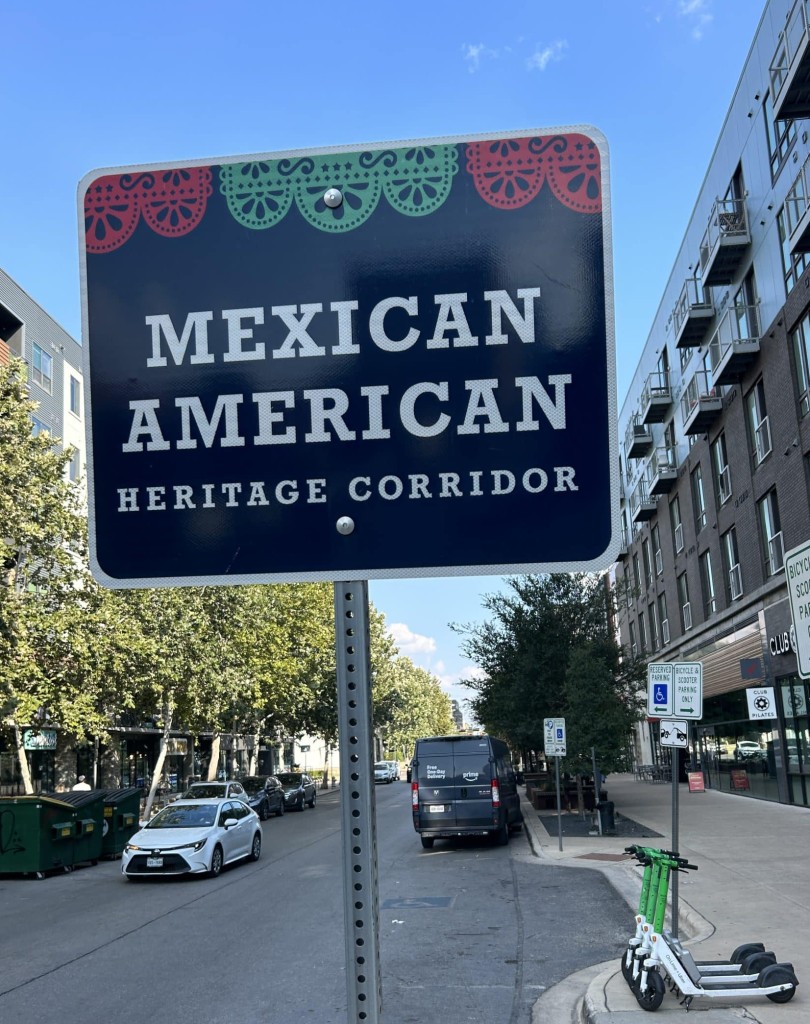
Downtown Austin hides a corridor of Mexican American history in plain sight. Along Fifth Street, murals, landmarks and long-standing businesses tell the story of a community whose roots stretch back more than a century — a story now getting long-overdue recognition.
The Texas Commission on the Arts recently designated the 5th Street Mexican American Heritage Corridor, one of Austin’s newest cultural districts. Now, the cultural district – meant to attract tourism and help boost the economy – will also highlight the city’s history.
“If you think about San Antonio’s Mexican history, it’s just in your face. It’s everywhere, and the city is very proud of it and showcases it, and, actually, it’s a tourist attraction,” said Mexic-Arte Museum Co-Founder and Executive Director Sylvia Orozco, who has pushed to get more recognition of the local corridor since the late 1990s. “Whereas 90 miles north of San Antonio is Austin, and it’s like, well, where are the Mexicans? What is our history? Where are they, and where did we start? Why aren’t they downtown?”
The designation allows the district to apply for up to $200,000 from the commission, which Orozco said she plans to do. The Mexic-Arte Museum along with the Downtown Alliance and City of Austin have been leading these cultural preservation efforts. With the grant, Orozco plans to start a nonprofit with official staff members who can be dedicated to operating the district.
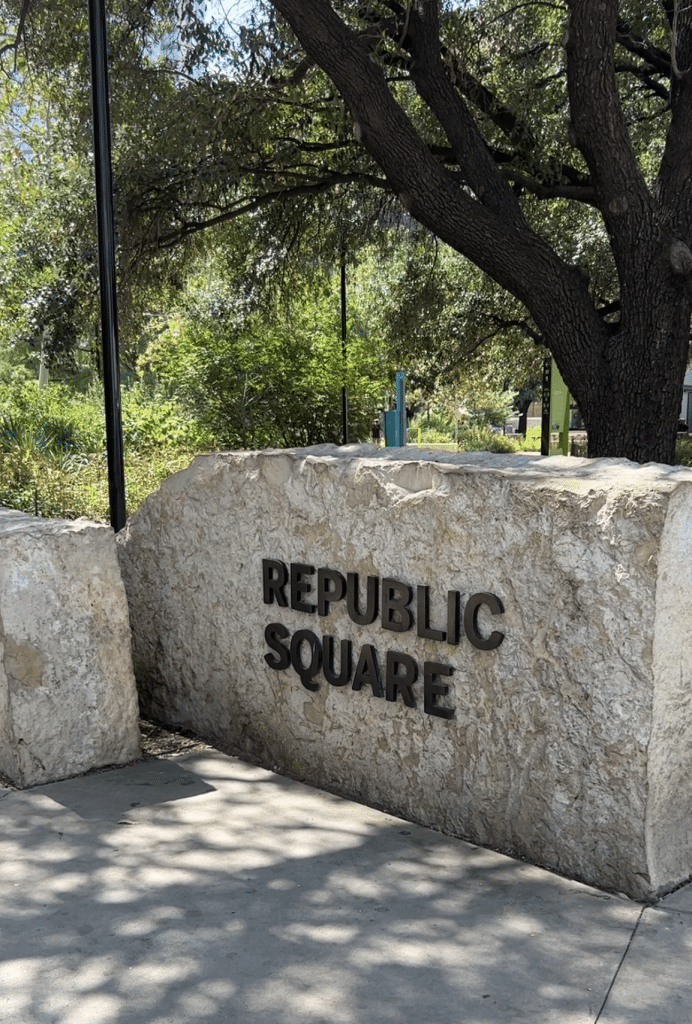
With the new designation, she also hopes the city updates the signs downtown which currently read “Mexican American Heritage Corridor” to “Cultural District” and would like to see educational banners added along the corridor, similar to the ones from a past partnership in Republic Square.
Gary Gibbs, the executive director of the Texas Commission on the Arts, said although the area is no longer a predominantly Mexican American community, history made its mark and the cultural impact is still visible.
The Downtown Alliance, an organization dedicated to preserving Austin’s culture, joined the museum in its efforts in 2023. Raasin McIntosh, the alliance’s vice president of active urbanism, said it plans to fill the street with local art, make it more walkable and boost the corridor’s presence downtown.
“Reviving culture isn’t just about looking back – it’s about creating space for it to thrive today. Through this designation, we’re investing in public art, heritage grants, and programming that reflect lived experiences,” McIntosh said. “We’re working to ensure that the corridor becomes a canvas for storytelling, celebration, and economic opportunity.”
Along with the 5th Street Mexican American Cultural District, the commission also designated another one in East Austin – the Govalle Cultural District. The district describes itself as “a creative hub where artists, educators, nonprofits, and neighbors work together to foster an inclusive, affordable, and thriving community.” The district is home to The Museum of Human Achievement, Govalle Elementary School and Canopy Austin, a space that houses art studios and creative businesses.
With the two new districts, Austin now has four state-designated cultural districts, along with the Red River Cultural District and Six Square.
La Historia
The corridor starts at Republic Square, which used to be known as “Mexican Park” or “Guadalupe Park” in the 1880s because of its large Mexican population and influence, according to a Mexic-Arte Museum timeline. The Chili Factory, which employed mainly Mexican and Tejano residents, and the Our Lady of Guadalupe Catholic Church, a big community gathering spot for the area, surrounded the park and solidified the Hispanic population in the park, according to the timeline.
“This was once Parque Mexicano, así se llamaba,” Orozco said. “This was your park, where you grew up — your home. This corridor and this district is now claiming it again for you.”
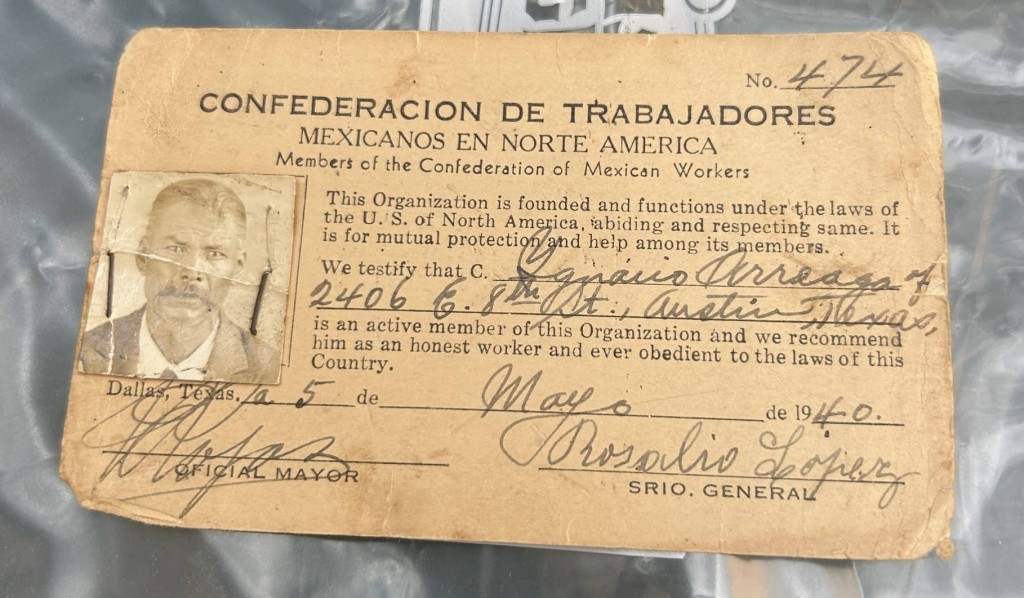
Andrew Gonzales, who helped work with the museum on the cultural district, said his ancestors lived in that area and his great grandfather was a member of the Confederation of Mexican Workers in North America and the Our Lady of Guadalupe Catholic Church.
In 1928, a city plan pushed Latino and Black residents out of the area and into the east side of Interstate 35, according to the city plan. By this point, the church had already relocated to the east side of the city, according to the church.
“My great uncles helped to reconstruct the new Our Lady of Guadalupe Catholic Church that was made out of brick, as opposed to the original wooden construction that was downtown,” Gonzales said.
Gonzales said his great grandfather was in an organization that hosted celebrations for Cinco de Mayo and 16 de septiembre, which used to be held in Republic Square Park, but by the 1930s, they transferred to the east side. He said he saw pictures from both decades and saw the locations change.
“I was blown away, because then I was connecting my own family’s history, this organization that my great grandfather was a part of, to the bigger history of what Mexican American people had experienced in the city of Austin,” Gonzales said.
Gonzales said he stayed around that same area in the east until his family sold his grandma’s house. Some family members also moved away, but he said a good amount of his family still lives in the streets surrounding the district.
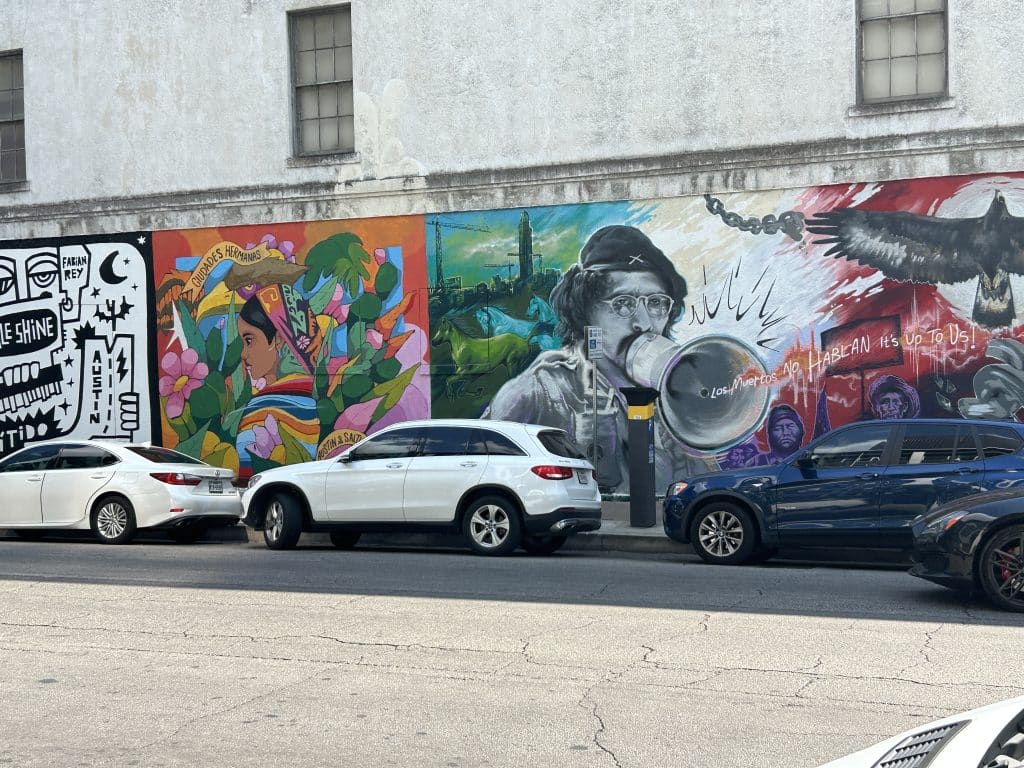
As decades passed, the footprint of these early Austinites, including Gonzales’ ancestors, slowly faded, Orozco said. However, in the 1990s, she noticed that the landmarks formed a corridor bridging the cultural gap between East and West Austin.
The problem was that this corridor was not highly visible. Orozco said she wanted something to attract visitors and let passersby know of the history of the corridor. The city passed a resolution to create a committee to establish the 5th Street Mexican American Heritage Corridor in 1999 and later installed signage in 2022. Now that it had recognition at the city level, Orozco said Mexic-Arte applied for designation as a cultural district at the state level in June. With that win, Orozco said, she will push the district to keep expanding. For Orozco, the designation isn’t just about remembering the past. It’s about creating a vibrant future for Mexican American culture downtown, where history is celebrated and new generations can see themselves reflected on Austin’s streets.
“Unless someone documents it, shows it and promotes it, it’s hidden,” Orozco said. “Our culture has been hidden, our people and our contributions have been hidden … I want to share and show and help and promote who we are and where we come from, and then to reestablish our place downtown.”
Author

Related Articles
“Creating it for Ourselves”: Del Valle Residents Unite to Bring Community-Owned Grocery Store to Food Desert
After years of waiting, Del Valle residents will soon have a grocery store in the neighborhood. The Del Valle Food Co-op expects to launch in late 2026 and aims to make it easier for residents to access quality groceries and fresh food.
East Austin Barrio Landmarks You Need to Visit
Step into the rich tapestry of Austin’s Mexican American history with the “East Austin Barrio Landmarks” video series, inspired by a project and self-guided tour by Preservation Austin.

What’s Next for Austin’s Historic Palm School?
Once a cornerstone of a Mexican American neighborhood, Palm School may find new life as alumni and community members work to reimagine its role in Austin. New oral history project helps document its past.